5 Innovative Teaching Methodologies Gaining Traction in US Schools by 2026
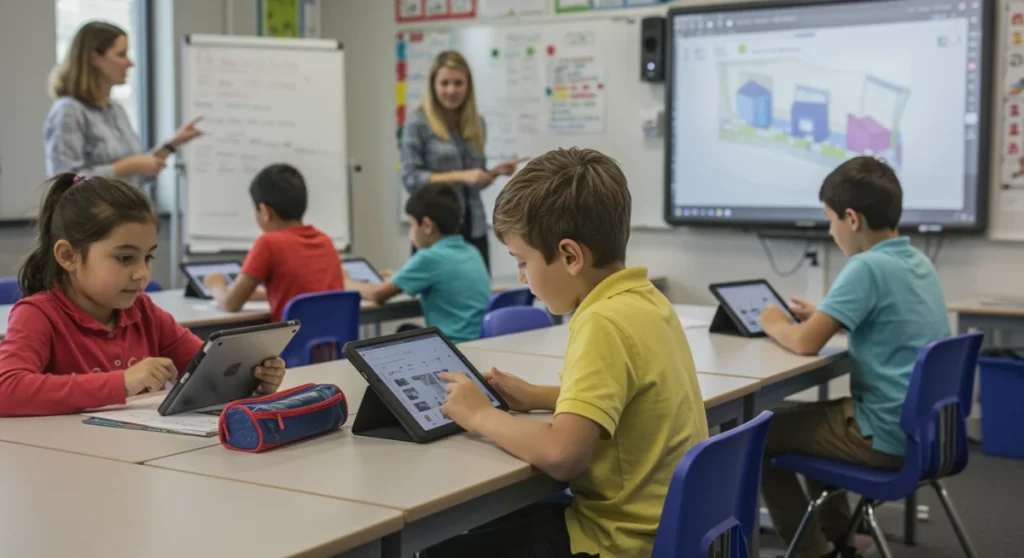
By 2026, US schools are rapidly adopting innovative teaching methodologies like personalized learning, project-based education, and blended models to foster deeper engagement and better prepare students for future challenges.
The landscape of education is continuously evolving, with educators constantly seeking more effective ways to engage students and prepare them for a dynamic future. By 2026, several innovative teaching methodologies are gaining significant traction in US schools, promising to reshape learning experiences. These approaches move beyond traditional models, focusing on student-centered, adaptive, and technology-enhanced environments that cater to diverse learning styles and foster critical 21st-century skills.
The rise of personalized learning paths
Personalized learning is at the forefront of educational innovation, tailoring the learning experience to each student’s unique needs, interests, and abilities. This methodology acknowledges that not all students learn at the same pace or in the same way, moving away from a one-size-fits-all approach to education. Its growing popularity is driven by advancements in educational technology and a deeper understanding of cognitive science.
In personalized learning environments, students often have a degree of choice in their learning objectives, resources, and even the pace at which they progress. Teachers act more as facilitators, guiding students through their individual learning journeys rather than solely delivering content. This shift empowers students to take ownership of their education, fostering greater motivation and deeper understanding.
Adaptive technologies and student agency
Adaptive learning technologies play a crucial role in implementing personalized learning. These platforms use data and artificial intelligence to assess a student’s current knowledge and adjust the learning content and pace accordingly. This ensures that students are consistently challenged but not overwhelmed, optimizing their learning potential.
- Individualized Pace: Students progress through material at their own speed, mastering concepts before moving on.
- Tailored Content: Learning materials are customized based on student interests and prior knowledge.
- Real-time Feedback: Technology provides immediate feedback, allowing students to correct misconceptions quickly.
- Student Choice: Learners often have options in how they demonstrate their understanding, aligning with different strengths.
The ultimate goal of personalized learning is to create a more equitable and effective educational system where every student can achieve their full potential. By 2026, expect to see more schools adopting sophisticated adaptive learning software and training educators to design and manage these highly individualized learning environments effectively, leading to significant improvements in student outcomes and engagement across various subjects.
Project-based learning: Real-world application
Project-based learning (PBL) is gaining considerable momentum, transforming classrooms into dynamic workshops where students tackle real-world problems and challenges. This methodology emphasizes learning by doing, encouraging students to apply knowledge and skills in meaningful, authentic contexts. Instead of passive reception of information, students actively investigate, design, and create solutions.
PBL typically involves a complex, open-ended question or problem that students work on for an extended period, often culminating in a public presentation or product. This approach naturally integrates various subjects, fostering interdisciplinary thinking and collaboration. It moves beyond rote memorization, promoting critical thinking, problem-solving, and communication skills essential for future success.
Developing essential 21st-century skills
The benefits of project-based learning extend far beyond content mastery. Students develop a wide array of soft skills that are highly valued in the modern workforce. Managing projects, working in teams, and presenting findings are all integral components of PBL that mirror professional environments.
- Critical Thinking: Students analyze complex problems and devise creative solutions.
- Collaboration: Working in teams teaches negotiation, compromise, and shared responsibility.
- Communication: Presenting findings and defending ideas strengthens oral and written communication.
- Creativity: Open-ended projects encourage innovative thinking and diverse approaches.
As US schools increasingly recognize the need to prepare students for jobs that may not even exist yet, PBL offers a robust framework for developing adaptable and resilient learners. By 2026, the integration of PBL is expected to become more widespread, with educators designing more elaborate and impactful projects that connect classroom learning to community needs and global issues, making education more relevant and engaging for students.
Blended learning models: Integrating digital and traditional
Blended learning, a hybrid approach that combines online educational materials and opportunities for interaction with traditional place-based classroom methods, is rapidly becoming a staple in US schools. This methodology leverages the best of both worlds, offering flexibility and personalized pacing through digital resources while retaining the invaluable benefits of face-to-face instruction and social interaction.
The appeal of blended learning lies in its adaptability. It allows educators to differentiate instruction more effectively, providing students with control over the time, place, path, and pace of their learning. This model often involves students learning some content online at home or in a lab, then coming together for collaborative activities, discussions, and direct instruction from the teacher.
Flexible approaches to instruction
Various models of blended learning exist, each offering different configurations of online and in-person components. The most common include the ‘Rotation Model,’ where students rotate between self-paced online learning and group activities, and the ‘Flex Model,’ which provides online as the backbone of learning, with teachers available for face-to-face support.
- Flipped Classroom: Students learn new content online at home and practice applying it in class.
- Station Rotation: Students rotate through various stations, some online, some offline.
- Individual Rotation: Students rotate through stations on a customized schedule set by the teacher.
- Enriched Virtual: Courses are primarily online, but students attend required face-to-face sessions.
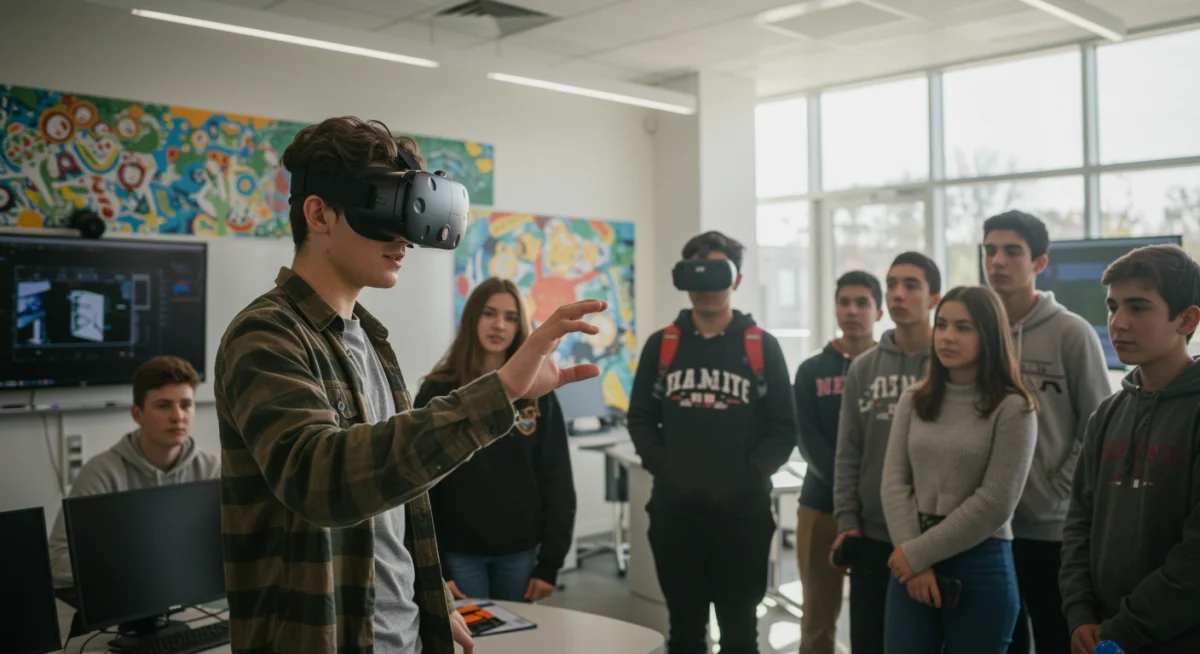
The pandemic accelerated the adoption of blended learning, proving its resilience and effectiveness in maintaining educational continuity. By 2026, robust blended learning frameworks are anticipated to be fully integrated into school curricula, offering a more dynamic, engaging, and resilient educational system that can adapt to unforeseen challenges while optimizing student learning experiences and teacher efficiency.
Social-emotional learning (SEL) integration
Social-emotional learning (SEL) is no longer a separate program but an integrated methodology woven into the fabric of daily instruction in many US schools. SEL focuses on developing the self-awareness, self-management, social awareness, relationship skills, and responsible decision-making abilities of students. It recognizes that academic success is deeply intertwined with emotional well-being and social competence.
Integrating SEL means explicitly teaching and modeling these skills within academic subjects and classroom routines. For instance, a math lesson might incorporate discussions about perseverance and managing frustration when solving complex problems, or a literature class could explore empathy through character analysis. This holistic approach aims to nurture well-rounded individuals who are not only academically proficient but also emotionally intelligent and socially responsible.
Building resilient and empathetic students
The emphasis on SEL has grown due to increasing awareness of mental health challenges among youth and the understanding that these skills are crucial for success in all aspects of life. Schools are finding that when students feel safe, understood, and capable of managing their emotions, their academic performance improves significantly.
- Self-awareness: Recognizing one’s emotions, strengths, and weaknesses.
- Self-management: Regulating emotions, setting goals, and demonstrating self-discipline.
- Social awareness: Understanding and empathizing with others from diverse backgrounds.
- Relationship skills: Building healthy relationships and communicating effectively.
By 2026, SEL is expected to be a fundamental component of teacher training and curriculum design across the US. Schools will increasingly adopt comprehensive SEL programs and integrate these competencies into every subject, fostering a supportive and inclusive learning environment that prepares students for academic challenges and the complexities of personal and professional life, creating a more compassionate generation.
Gamification and immersive learning experiences
Gamification and immersive learning experiences are transforming how students engage with educational content, making learning more interactive, enjoyable, and effective. Gamification applies game-design elements and game principles in non-game contexts, while immersive learning uses technologies like virtual reality (VR) and augmented reality (AR) to create highly engaging and realistic learning environments.
These methodologies tap into students’ natural curiosity and desire for challenge, turning potentially dry subjects into exciting adventures. By introducing points, badges, leaderboards, and narratives, gamification motivates students through achievement and competition. Immersive technologies, on the other hand, allow students to explore complex concepts and historical events as if they were physically present, leading to deeper understanding and retention.
Enhancing engagement and retention through play
The power of gamification lies in its ability to provide immediate feedback, clear goals, and a sense of progression, which are highly motivating factors. Immersive learning takes this a step further by creating memorable experiences that are difficult to replicate through traditional methods, such as dissecting a virtual frog or walking through ancient Rome.
- Increased Motivation: Game elements make learning feel less like work and more like play.
- Deeper Understanding: Immersive experiences provide contextual learning that aids comprehension.
- Skill Development: Problem-solving and critical thinking are honed in interactive environments.
- Safe Practice: VR/AR allows for practicing complex procedures in a risk-free setting.
As VR/AR technology becomes more accessible and affordable, its integration into US classrooms is set to skyrocket by 2026. Educators will increasingly leverage these tools to create dynamic learning modules, from virtual field trips to interactive simulations. Gamification will also become more sophisticated, moving beyond simple rewards to integrate narrative-driven learning journeys that keep students captivated and eager to learn, ultimately revolutionizing the learning process.
Competency-based education: Mastering skills, not just time
Competency-based education (CBE) represents a fundamental shift from traditional time-based learning to a model focused on student mastery of specific skills and knowledge. Instead of progressing based on seat time or age, students advance once they demonstrate proficiency in a given competency. This methodology ensures that all students achieve a deep understanding of the material before moving to the next level.
This personalized approach allows students to learn at their own pace, providing additional support for those who need more time and enabling advanced learners to accelerate. CBE often involves clear learning objectives, transparent assessment criteria, and flexible pathways. It empowers students to take accountability for their learning outcomes and provides educators with precise data on student progress.
Focusing on demonstrable mastery
The implementation of CBE requires a significant redesign of curriculum and assessment practices. Assessments in a CBE model are often performance-based, requiring students to apply their knowledge and skills in practical ways rather than just recalling facts. This ensures that students are not just memorizing information but truly understanding and being able to utilize it.
- Mastery Focused: Students must demonstrate proficiency before advancing.
- Flexible Pacing: Learners progress at their own optimal speed.
- Clear Expectations: Learning objectives and success criteria are explicit.
- Meaningful Credentials: Competencies earned reflect actual skill acquisition.
By 2026, more US schools and districts are expected to transition towards CBE models, particularly in high schools and higher education. This shift is driven by the demand for graduates who possess demonstrable skills and are prepared for the demands of the modern workforce. CBE promises to create a more efficient and effective educational system that prioritizes deep learning and individual student success, fostering a generation of truly competent learners.
| Methodology | Brief Description |
|---|---|
| Personalized Learning | Tailoring education to individual student needs, pace, and interests using adaptive technology. |
| Project-Based Learning | Students learn by actively engaging with real-world problems and creating solutions. |
| Blended Learning | Combines online and traditional classroom instruction for flexible, hybrid learning. |
| Social-Emotional Learning | Integrating skills like self-awareness, empathy, and responsible decision-making into curriculum. |
Frequently asked questions about innovative teaching
Personalized learning tailors education to each student’s unique needs, interests, and pace. It benefits students by increasing engagement, fostering deeper understanding, and promoting self-direction, ensuring they master concepts before advancing and developing ownership over their educational journey.
Project-based learning is gaining popularity because it helps students develop critical 21st-century skills like problem-solving, critical thinking, collaboration, and communication. It makes learning more relevant by connecting academic content to real-world challenges, deeply engaging students and preparing them for future careers.
Blended learning models enhance education by combining the flexibility of online resources with the benefits of in-person instruction. They offer personalized pacing, diverse learning activities, and opportunities for direct teacher interaction, creating a dynamic and adaptable learning environment that caters to various student needs and preferences.
SEL plays a crucial role in modern education by developing students’ self-awareness, self-management, social awareness, relationship skills, and responsible decision-making. Integrating SEL helps foster well-rounded individuals, improves academic performance, and builds a supportive classroom culture, addressing students’ holistic development for overall success.
Gamification and immersive learning significantly boost student engagement by making education more interactive and enjoyable. Gamification uses game elements like points and challenges, while immersive experiences (VR/AR) provide realistic, captivating environments. Both approaches motivate students through active participation, curiosity, and a sense of achievement, leading to better retention and deeper understanding.
Conclusion
The widespread adoption of these innovative teaching methodologies by 2026 signifies a profound transformation in US education. From personalized learning paths that cater to individual needs to project-based approaches that foster real-world skills, and from flexible blended models to the crucial integration of social-emotional learning and engaging gamified experiences, schools are embracing diverse strategies. This evolution is driven by a collective commitment to creating more effective, equitable, and engaging learning environments that prepare students not just for examinations, but for successful and fulfilling lives in an ever-changing global landscape. The future of education in the US promises to be dynamic, student-centered, and deeply impactful.
