Comparing US Public vs. Private School Performance: 2025 Analysis
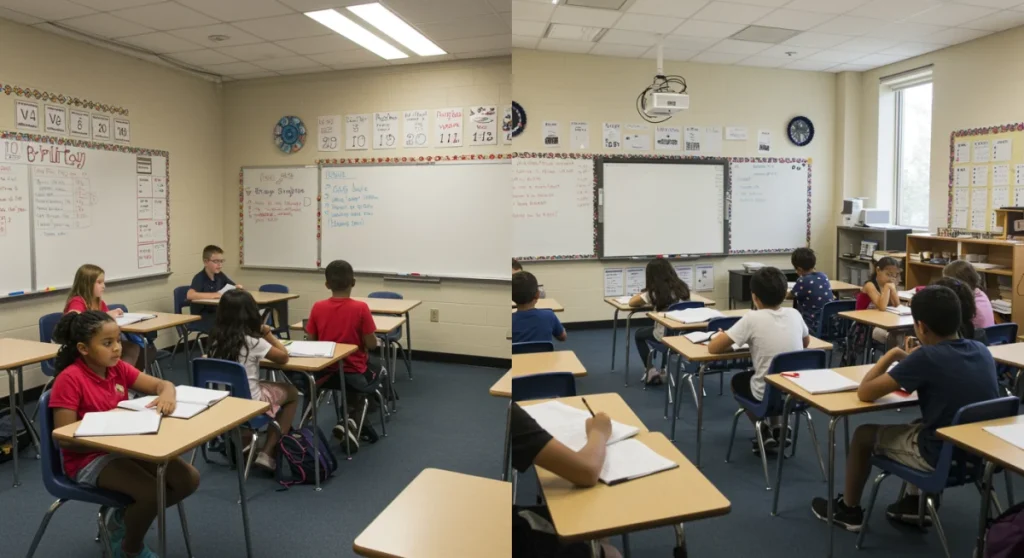
A 2025 analysis reveals nuanced differences in US public vs. private school performance, with neither sector consistently outperforming the other across all academic, social, and emotional metrics.
As we navigate the mid-2020s, the perennial debate about the effectiveness of public versus private education continues to evolve. Understanding the nuances of US school performance is crucial for parents, policymakers, and educators alike.
Academic Achievement: A Closer Look at Test Scores and Beyond
Academic achievement remains a cornerstone of evaluating school performance. In 2025, data suggests a complex picture, where raw test scores alone do not tell the whole story of student success in both public and private institutions.
Standardized Test Results
Historically, private schools have often boasted higher average standardized test scores. However, recent trends indicate a narrowing gap. Public schools, especially those in affluent districts or with specialized programs, are increasingly matching or even surpassing their private counterparts in certain subjects.
- NAEP Scores: The National Assessment of Educational Progress (NAEP) data for 2025 shows that while private school students generally perform better in reading and mathematics, the advantage often diminishes when controlling for socioeconomic factors.
- SAT/ACT Performance: Both sectors exhibit a wide range of scores. Private schools typically report higher average scores, but many public schools, particularly selective magnet or charter schools, produce top-tier results.
- Subject-Specific Strengths: Private schools often excel in advanced placement (AP) and international baccalaureate (IB) participation rates, while public schools frequently offer a broader array of vocational and technical courses.
Curriculum Depth and Breadth
Beyond test scores, the quality of curriculum plays a significant role. Private schools often have the flexibility to implement unique curricula, focusing on areas like arts, specific philosophies (e.g., Montessori, Waldorf), or advanced STEM programs. Public schools, while bound by state standards, offer a vast selection of courses and extracurriculars due to their larger scale and diverse student body.
The emphasis on critical thinking, problem-solving, and interdisciplinary studies is growing in both sectors, reflecting evolving educational philosophies. Many public school districts are adopting innovative teaching methodologies, while private schools continue to refine their specialized approaches. The goal across the board is to prepare students not just for college, but for a rapidly changing global workforce.
In conclusion, academic achievement is not a monolithic metric. While private schools may show slight advantages in certain standardized tests, public schools offer immense diversity in curriculum and increasingly competitive academic environments, especially when socioeconomic factors are considered.
Resource Allocation and Funding Disparities
The financial models underpinning public and private schools create fundamental differences in resource allocation, directly impacting educational offerings and student experiences. These disparities are a critical lens through which to compare their performance in 2025.
Funding Sources and Their Impact
Public schools are primarily funded by local, state, and federal taxes, making them susceptible to economic fluctuations and property tax bases. This can lead to significant inequities between districts. Private schools, conversely, rely on tuition, donations, and endowments, allowing for greater control over their budgets and often, more robust per-student spending.
- Teacher Salaries: Private schools often have the flexibility to offer higher salaries or more attractive benefits, potentially drawing more experienced or specialized educators. Public schools, however, benefit from union protections and standardized pay scales.
- Facilities and Technology: Private institutions frequently boast state-of-the-art facilities, including advanced labs, athletic complexes, and cutting-edge technology. Public schools’ infrastructure varies widely, with many facing challenges in updating older buildings and technology.
- Class Sizes: Smaller class sizes are a hallmark of many private schools, allowing for more individualized attention. While some public schools achieve small class sizes, particularly in elementary grades, larger class sizes are common in many districts.
Extracurriculars and Specialized Programs
The funding model also dictates the breadth and depth of extracurricular activities and specialized programs. Private schools often offer a wide array of niche clubs, sports, and arts programs. Public schools, while offering numerous options, might have limitations due to budget constraints or lower student demand for highly specialized activities.
However, many public schools leverage community partnerships and grants to enrich their offerings, providing opportunities that might not be available in smaller private settings. The community school model, gaining traction in 2025, integrates social services and expanded learning opportunities directly into public school campuses, often surpassing what private schools can offer in terms of holistic support.
Ultimately, resource allocation creates distinct landscapes. Private schools generally have more discretionary funds per student, leading to certain advantages in facilities and specialized programs. Public schools, despite funding challenges, harness scale and community support to provide a diverse and often comprehensive educational experience.
Student Well-being and Social-Emotional Learning (SEL)
Beyond academics, the focus on student well-being and social-emotional learning (SEL) has intensified across both public and private sectors in 2025. This holistic approach recognizes that a student’s emotional health and social skills are critical for overall success.
Mental Health Support Systems
Both school types are increasingly investing in mental health resources. Private schools often have dedicated counselors and smaller student-to-counselor ratios, allowing for more personalized support. Public schools, while sometimes facing resource limitations, are expanding access to school psychologists, social workers, and community mental health partnerships.
The stigma around mental health is slowly eroding, leading to more open discussions and proactive interventions in both environments. Programs focusing on mindfulness, stress reduction, and resilience building are becoming commonplace, reflecting a shared commitment to student mental well-being.
Fostering a Sense of Community and Belonging
A strong sense of community is vital for student development. Private schools often cultivate close-knit communities due to their smaller size and shared values or religious affiliations. This can lead to strong peer bonds and a supportive environment.
- Public School Diversity: Public schools, by nature, serve a diverse student population, exposing students to a wide range of backgrounds, cultures, and perspectives. This diversity can foster a broader understanding of society and develop crucial social skills.
- Bullying and Social Dynamics: Both settings grapple with issues like bullying and social exclusion. Private schools might have stricter codes of conduct, while public schools often implement comprehensive anti-bullying programs and restorative justice practices.
- Parental Involvement: Parental engagement is a key predictor of student success in both sectors. Private schools often have highly engaged parent communities, while public schools work hard to engage diverse parent groups through various outreach efforts.
The emphasis on SEL is transforming educational practices. While private schools may offer more tailored, smaller-group experiences for social-emotional growth, public schools provide a rich, diverse social environment that prepares students for a complex world, often with robust, albeit sometimes stretched, support systems.
Teacher Quality and Professional Development
The effectiveness of any educational institution hinges significantly on the quality of its teachers. In 2025, both public and private schools are grappling with teacher shortages and the need for continuous professional development, albeit with different approaches.
Recruitment and Retention Strategies
Public schools often rely on state certification requirements and standardized hiring processes. They attract teachers with competitive benefits packages and the promise of a structured career path. Private schools, on the other hand, have more flexibility in hiring, sometimes prioritizing subject matter expertise over traditional certification, and may offer unique cultural environments or smaller class sizes as incentives.
Teacher retention is a challenge across the board. Public schools face issues related to high-stakes testing, large class sizes, and administrative burdens. Private schools might contend with lower salaries compared to some public districts, though they often compensate with greater autonomy and a supportive school culture.
Ongoing Professional Development
Continuous learning is essential for educators to stay current with best practices and evolving pedagogical theories. Both sectors invest in professional development, but the nature and frequency can differ.
- Public School Training: Public school districts often provide district-wide training on curriculum changes, technology integration, and special education mandates. Opportunities for advanced degrees and certifications are also common.
- Private School Development: Private schools might offer more individualized professional development, sending teachers to specialized conferences or workshops aligned with the school’s unique mission or curriculum. They may also foster internal mentorship programs.
- Innovation in Pedagogy: Both types of schools are exploring innovative teaching methods, including blended learning, project-based learning, and personalized instruction. Professional development in these areas is crucial for effective implementation.
Ultimately, teacher quality is paramount. While public schools benefit from standardized training and a diverse pool of educators, private schools can offer specialized professional growth and a unique teaching environment. Both are striving to equip their teachers with the skills needed to educate 21st-century learners.
Post-Secondary Outcomes and Long-Term Success
One of the most significant metrics for comparing school performance is the long-term success of their graduates, particularly in post-secondary education and career trajectories. A 2025 analysis reveals distinct patterns, though correlation versus causation remains a complex discussion.
College Enrollment and Selectivity
Private school graduates traditionally show higher rates of matriculation into four-year colleges, and often, into highly selective institutions. This can be attributed to factors like dedicated college counseling, a culture that strongly emphasizes higher education, and often, a student body already predisposed to college attendance.
Public schools, while having a broader range of post-secondary outcomes, also send a significant number of students to both two-year and four-year colleges. Many large public high schools have robust college counseling departments and strong feeder relationships with state universities, ensuring access to higher education for a diverse student population.
Career Preparedness and Global Competencies
Beyond college acceptance, the focus has shifted to preparing students for diverse career paths and equipping them with global competencies. Both public and private schools are adapting their curricula to meet these demands.
- Internship Opportunities: Private schools often leverage alumni networks to secure internships and mentorships for students, providing valuable real-world experience. Public schools are increasingly partnering with local businesses and community organizations to offer similar opportunities.
- Soft Skills Development: Both sectors emphasize the development of critical soft skills such as communication, collaboration, creativity, and critical thinking, recognizing their importance in any professional setting.
- Global Citizenship: Private schools often incorporate international travel and global studies into their curriculum. Public schools, through diverse student populations and world language programs, also foster global awareness and intercultural understanding.
In summary, while private schools may have a slight edge in placing students in elite universities, public schools are effectively preparing a vast and diverse student body for a wide array of post-secondary options and career paths, emphasizing real-world skills and global awareness.
Innovation and Adaptability in Education
The educational landscape is constantly evolving, and a school’s ability to innovate and adapt is crucial for its long-term performance. In 2025, both public and private sectors demonstrate unique strengths and challenges in embracing new pedagogical approaches and technologies.
Technological Integration and Digital Literacy
Both types of schools are heavily integrating technology into their classrooms. Private schools often have the advantage of readily adopting new hardware and software due to flexible budgets and smaller administrative hurdles. This allows for rapid implementation of cutting-edge educational tools.
Public schools, while sometimes slower to adopt due to bureaucratic processes and funding cycles, often implement technology at a larger scale. They are also at the forefront of ensuring digital equity, providing devices and internet access to students who might not otherwise have it, thereby fostering broader digital literacy across socioeconomic strata.
Pedagogical Experimentation and Flexibility
Private schools typically enjoy greater autonomy in curriculum design and teaching methods, allowing them to experiment with innovative pedagogies. This can lead to specialized programs or unique learning environments that cater to specific educational philosophies.
- Project-Based Learning: Both sectors increasingly employ project-based learning, which engages students in real-world problems and promotes deeper understanding. Private schools may have more resources for elaborate projects, while public schools often integrate community-based projects.
- Personalized Learning Paths: The concept of personalized learning, tailoring education to individual student needs and paces, is gaining traction. Private schools can more easily implement highly individualized plans due to smaller class sizes. Public schools are using adaptive technologies and differentiated instruction to achieve similar goals at scale.
- Response to Change: The COVID-19 pandemic highlighted the adaptability of schools. While private schools often transitioned quickly to remote learning due to existing tech infrastructure, many public schools demonstrated remarkable resilience and creativity in ensuring continuity of education for all students, often innovating under immense pressure.
Ultimately, innovation and adaptability are key drivers of educational performance. Private schools often lead in adopting niche technologies and experimental pedagogies due to their flexibility. Public schools, however, drive large-scale innovation, focusing on equitable access to technology and adapting broad pedagogical shifts to serve diverse student populations effectively.
| Key Metric | Performance Overview |
|---|---|
| Academic Achievement | Private schools often show higher average test scores, but public schools are narrowing the gap, especially when controlling for socioeconomic factors. Diversity in curriculum is strong in both. |
| Resource Allocation | Private schools typically have more per-student funding and better facilities. Public schools leverage scale and community for diverse offerings despite budget constraints. |
| Student Well-being | Both sectors prioritize SEL and mental health. Private schools often offer more individualized support; public schools provide diverse social environments. |
| Post-Secondary Outcomes | Private school graduates often matriculate into selective universities. Public schools prepare a diverse student body for various post-secondary and career paths. |
Frequently Asked Questions About School Performance
Not consistently across all metrics. While private schools often show higher average test scores, public schools are increasingly competitive, especially when socioeconomic factors are controlled. Performance varies greatly within both sectors based on location, resources, and specific programs.
Public schools are tax-funded, leading to disparities based on local property values. Private schools rely on tuition, donations, and endowments, giving them more budgetary autonomy. This affects resources like facilities, technology, and teacher salaries.
Both public and private schools are prioritizing student well-being and mental health. This includes expanding counseling services, implementing SEL programs, and fostering a sense of belonging. Private schools may offer more individualized attention, while public schools focus on broad access to support.
Teacher quality varies in both sectors. Private schools may attract specialized educators with flexible hiring. Public schools benefit from standardized certification and large professional development networks. Both are committed to ongoing teacher training and retention efforts.
Both prepare students effectively, but differently. Private schools often excel in college placement for selective universities. Public schools prepare a diverse student body for a broader range of post-secondary options and career paths, emphasizing practical skills and global competencies.
Conclusion
The 2025 analysis of US school performance reveals that the choice between public and private education is far from a simple dichotomy. While private schools often present advantages in specific academic metrics, smaller class sizes, and specialized programs, public schools offer unparalleled diversity, comprehensive community integration, and increasingly innovative approaches to education. The landscape is dynamic, with both sectors continuously adapting to meet the evolving needs of students in an increasingly complex world. Ultimately, the ‘better’ choice often depends on individual student needs, family values, and specific local contexts, rather than a universal superiority of one system over the other.
