Economic Outlook: US GDP Growth 2025 Projections at 1.8%
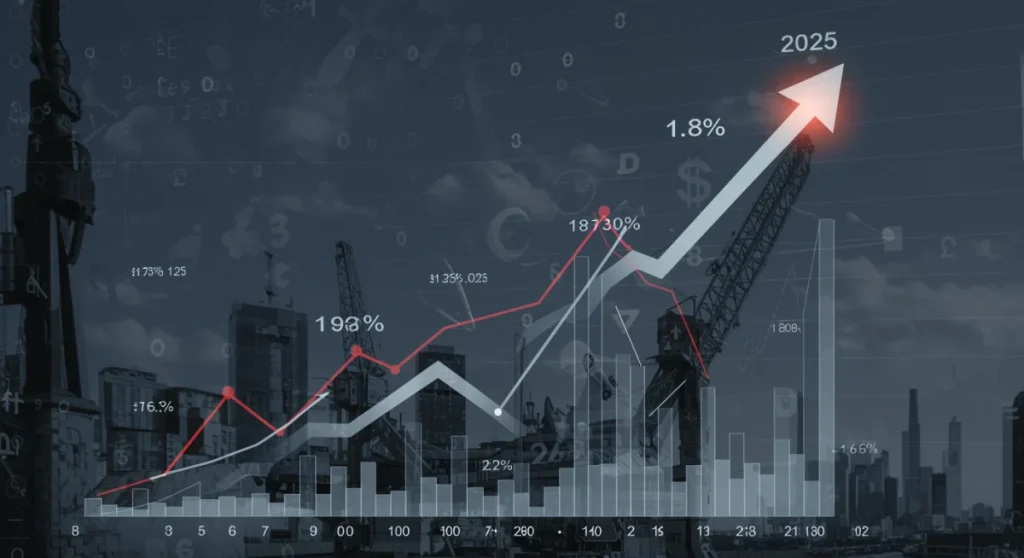
The economic outlook: projections for US GDP growth in 2025, anticipated at 1.8%, suggests a period of moderate expansion influenced by ongoing disinflationary pressures and a recalibration of monetary policy.
The economic outlook: projections for US GDP growth in 2025, anticipated at 1.8%, presents a critical juncture for policymakers, businesses, and consumers alike. After periods of unprecedented volatility and recovery, understanding the factors shaping this forecast is paramount. This article will delve into the intricacies of these projections, examining the underlying economic forces, potential challenges, and opportunities that could define the American economy in the coming year.
Understanding the 2025 GDP Growth Projection
The anticipation of a 1.8% GDP growth rate for the United States in 2025 reflects a consensus among many leading economic institutions. This projection indicates a moderation from the stronger growth observed in the immediate post-pandemic recovery years, yet it still signifies a resilient economy capable of sustained expansion. Several key components contribute to this outlook, each carrying its own weight in the broader economic landscape.
Forecasting GDP is a complex endeavor, relying on a multitude of indicators and models. Economists consider everything from consumer spending habits and business investment to government policies and global trade dynamics. The 1.8% figure suggests a balance where inflationary pressures are expected to cool, allowing for more stable economic activity without overheating.
Key Factors Influencing the Projection
- Consumer Spending: As the largest component of US GDP, consumer spending remains a primary driver. Forecasts suggest steady, albeit slightly moderated, household consumption, supported by a robust labor market and easing inflation.
- Business Investment: Corporate spending on capital goods and expansion projects is expected to continue, albeit at a measured pace. Factors like technological advancements and the need for efficiency drive some of this investment.
- Government Spending: Fiscal policies, including infrastructure projects and social programs, will play a role. The extent of government intervention can significantly impact overall growth.
- Net Exports: Global economic conditions and trade policies will influence US exports and imports, affecting the net export component of GDP. A stable global environment generally supports US trade.
Ultimately, the 1.8% projection is not merely a number but a reflection of an intricate web of economic interactions. It suggests that while the economy may not be roaring, it is expected to maintain a healthy pace of expansion, avoiding both stagnation and excessive inflationary pressures. This moderate growth rate provides a foundation for continued job creation and income stability.
Comparative Analysis: US Growth Against Global Peers
Placing the US GDP growth projection of 1.8% for 2025 in a global context is crucial for a comprehensive understanding. While 1.8% might seem modest compared to some emerging economies, it often represents a solid performance for a mature, developed economy like the United States. Many developed nations are grappling with similar, if not more pronounced, challenges such as aging populations, slower productivity growth, and geopolitical uncertainties.
Comparing the US outlook to other G7 nations, for instance, often reveals the US economy maintaining a relatively robust position. Countries in Europe and Japan frequently face more significant structural impediments to growth, leading to lower projections. This relative strength of the US economy can be attributed to its dynamic labor market, strong innovation ecosystem, and the sheer size of its domestic consumer base.
How the US Compares to Key Regions
- European Union: Many EU countries are projected to experience lower growth rates, often due to energy crises, slower demographic shifts, and varying fiscal policies across member states.
- Japan: Japan’s economy continues to battle deflationary pressures and an aging population, leading to persistently low growth forecasts.
- China: While China’s growth rates historically outpace the US, its economy is undergoing significant structural shifts, including a real estate sector downturn and efforts to rebalance towards domestic consumption, which could moderate its future growth.
- Emerging Markets: Some emerging markets might show higher growth figures, but these often come with higher volatility and risk. The US offers a more stable, albeit slower, growth trajectory.
The US economy’s projected 1.8% growth in 2025, when viewed alongside global counterparts, underscores its resilience and adaptability. It suggests that despite global headwinds, the fundamental strengths of the American economic system are expected to continue supporting moderate expansion. This comparative perspective helps in understanding the attractiveness of the US market for global investors and its role in the world economy.
Inflationary Pressures and Monetary Policy Implications
The trajectory of inflation remains a pivotal factor in shaping the 2025 economic outlook. The anticipation of a 1.8% GDP growth rate is intrinsically linked to the assumption that inflationary pressures will continue to recede towards the Federal Reserve’s target. The Fed’s aggressive monetary tightening cycle over the past few years has been instrumental in cooling demand and bringing down consumer prices, but the full impact of these policies is still unfolding.
For 2025, the expectation is that inflation will settle into a more manageable range, allowing the Federal Reserve to potentially adjust its monetary policy stance. This could involve a pivot towards interest rate cuts, which would reduce borrowing costs for businesses and consumers, thereby stimulating economic activity. However, the timing and extent of such policy changes are highly dependent on incoming economic data.
Impact of Monetary Policy on Growth
- Interest Rates: Lower interest rates can encourage investment and consumer spending by making loans more affordable. Conversely, higher rates can dampen economic activity.
- Quantitative Tightening: The reduction of the Fed’s balance sheet also influences liquidity in the financial system, affecting credit availability and market sentiment.
- Forward Guidance: The Fed’s communication about its future policy intentions plays a significant role in shaping market expectations and economic behavior.
The delicate balancing act between controlling inflation and supporting economic growth will define monetary policy in 2025. A 1.8% GDP growth forecast suggests that the Fed is likely to achieve a soft landing, where inflation is tamed without triggering a severe recession. This scenario implies that while the economy will expand at a moderate pace, it will do so on a more stable foundation, reducing the risk of future inflationary spikes.
Labor Market Dynamics and Consumer Confidence
A robust labor market has been a hallmark of the US economy in recent years, and its continued strength is a crucial pillar supporting the 1.8% GDP growth projection for 2025. High employment rates and steady wage growth contribute directly to consumer spending, which, as previously noted, is a major driver of economic expansion. The interaction between labor market dynamics and consumer confidence forms a virtuous cycle: when people feel secure in their jobs and see their incomes rise, they are more likely to spend, further boosting economic activity.
However, the labor market isn’t static. While unemployment rates are expected to remain low, there could be shifts in job creation across sectors. Automation and technological advancements might lead to demand for new skills, while some industries might experience slower growth. Understanding these nuances is key to assessing the sustainability of consumer spending and overall economic health.
Key Labor Market Indicators to Watch
- Unemployment Rate: A consistently low unemployment rate signals a healthy labor market, encouraging consumer confidence.
- Wage Growth: Sustainable wage increases, especially those outpacing inflation, provide consumers with greater purchasing power.
- Job Openings: The number of available jobs reflects business demand for labor, indicating expansion or contraction in various sectors.
- Labor Force Participation: Changes in the proportion of the population working or actively seeking work can impact the economy’s productive capacity.
Consumer confidence, closely tied to labor market conditions, acts as a barometer for future spending. If consumers feel optimistic about their financial future and the broader economic environment, they are more inclined to make significant purchases and investments. The projected 1.8% GDP growth for 2025 suggests that the labor market is expected to remain supportive, fostering a level of consumer confidence that underpins moderate but steady economic expansion.
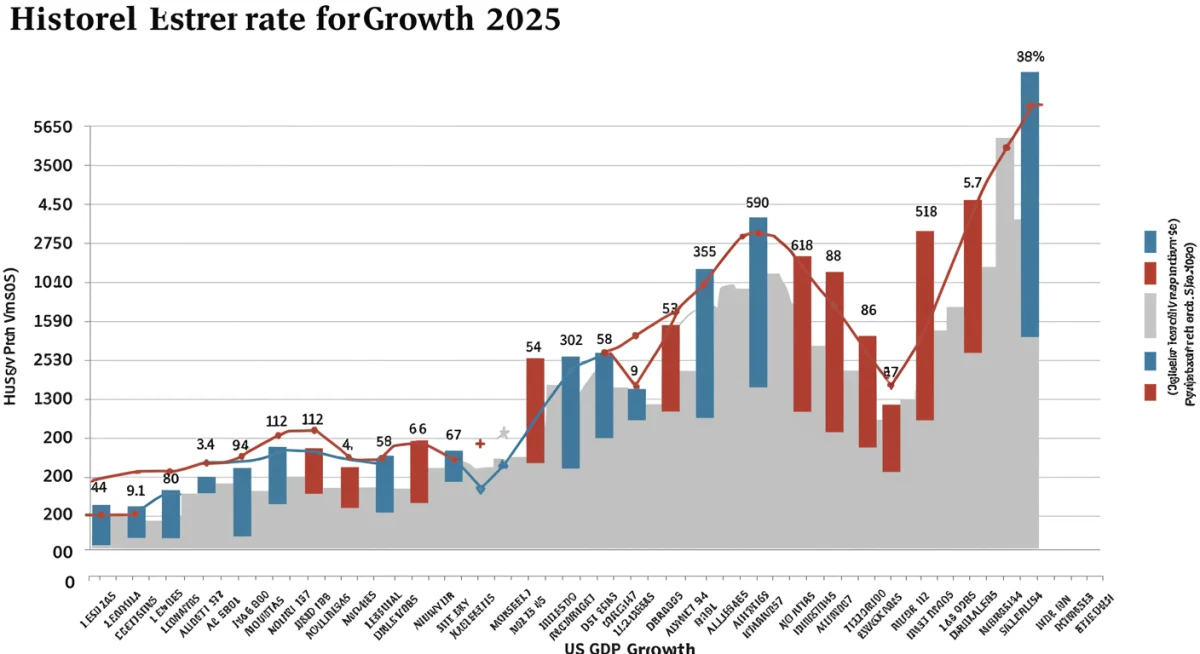
The interplay between a resilient labor market and robust consumer confidence is fundamental to the projected US GDP Growth 2025. As long as job creation remains stable and wages keep pace with or slightly exceed inflation, the foundation for sustained economic activity will be in place, helping to mitigate other potential headwinds.
Sectoral Contributions to GDP Growth
While the overall 1.8% GDP growth projection for 2025 provides a macroeconomic picture, a granular look at individual sectors reveals the diverse engines driving the US economy. Not all sectors contribute equally, and understanding which industries are expected to lead or lag can offer deeper insights into the nature of future growth. Technology, healthcare, and manufacturing are often highlighted as key areas, but shifts in consumer preferences and global supply chains can alter their relative importance.
The service sector, encompassing everything from retail to professional services, typically forms the largest share of the US economy. Its performance is heavily influenced by consumer spending and business investment. Manufacturing, while a smaller share, remains crucial for innovation and exports. Construction, often sensitive to interest rates, will also play a role, particularly if monetary policy eases.
Leading and Lagging Sectors
- Technology: Continued innovation in AI, cloud computing, and biotechnology is expected to drive significant growth and investment.
- Healthcare: Demand for healthcare services and advancements in medical technology ensure this sector’s consistent contribution.
- Manufacturing: Policies aimed at reshoring production and investments in automation could provide a boost, though global competition remains a factor.
- Retail: Performance will largely hinge on consumer confidence and disposable income, with e-commerce continuing its expansion.
- Real Estate: Sensitive to interest rates and housing supply, this sector’s contribution could be more volatile.
The diverse contributions from various sectors illustrate the complex and multifaceted nature of the US economy. The 1.8% projection suggests a broad-based, albeit moderate, expansion rather than a boom driven by a single industry. This diversification can also contribute to economic stability, as weaknesses in one sector might be offset by strengths in another, fostering a more resilient overall growth trajectory for 2025.
Potential Risks and Headwinds to the Outlook
While the 1.8% GDP growth projection for 2025 offers a relatively stable outlook, it is essential to acknowledge the potential risks and headwinds that could alter this trajectory. Economic forecasts are inherently uncertain, and unforeseen events or shifts in existing trends can significantly impact actual outcomes. Geopolitical instability, global economic slowdowns, and domestic policy challenges are among the most prominent concerns that could dampen growth.
Global events, such as conflicts, trade disputes, or widespread economic downturns in major trading partners, can reduce demand for US exports and disrupt supply chains, thereby affecting domestic production. Domestically, unexpected inflation surges could force the Federal Reserve to maintain a tighter monetary policy for longer, potentially stifling investment and consumption. Furthermore, political gridlock or policy uncertainty could deter business investment.
Major Risks to Consider
- Geopolitical Instability: Conflicts or rising tensions globally can disrupt trade, increase energy prices, and create market uncertainty.
- Global Economic Slowdown: A significant deceleration in major economies like China or Europe could reduce demand for US goods and services.
- Persistent Inflation: If inflation proves more stubborn than anticipated, the Fed might need to keep interest rates higher, impacting borrowing and spending.
- Supply Chain Disruptions: Renewed issues in global supply chains could lead to higher costs and production bottlenecks.
- Domestic Policy Uncertainty: Unclear or shifting government policies on taxation, regulation, or spending could deter investment.
Navigating these potential risks will be crucial for maintaining the projected 1.8% GDP growth in 2025. Policymakers and businesses will need to remain agile and adaptable, ready to respond to evolving conditions. While the current forecast is optimistic for moderate growth, a vigilant approach to these headwinds is necessary to ensure the continued health and stability of the US economy.
| Key Economic Factor | 2025 Outlook |
|---|---|
| GDP Growth | Anticipated at 1.8%, signaling moderate and stable expansion. |
| Inflation | Expected to moderate towards the Federal Reserve’s target, easing price pressures. |
| Labor Market | Projected to remain strong with low unemployment and steady wage growth. |
| Monetary Policy | Potential for interest rate adjustments based on incoming economic data. |
Frequently Asked Questions About the 2025 US Economic Outlook
A 1.8% GDP growth rate suggests a stable economy with continued job creation and moderate wage increases. For the average American, this generally translates to a healthy job market, stable incomes, and consumer prices that are increasing at a more manageable pace compared to recent years.
Historically, US GDP growth has varied significantly. A 1.8% projection is considered moderate for a developed economy, aligning with or slightly below the long-term average for mature economies, indicating steady rather than rapid expansion. It’s a healthy rate given current global challenges.
Consumer spending is the largest component of US GDP, making its role critical. Continued strength in household consumption, supported by a robust labor market and receding inflation, is expected to be a primary driver in achieving the projected 1.8% growth rate for 2025.
Yes, geopolitical events pose a significant risk to economic forecasts. Conflicts, trade disputes, or major international crises can disrupt global supply chains, increase commodity prices, and reduce global demand, potentially leading to a revision of the 1.8% GDP growth projection.
Given the 1.8% GDP growth projection and moderating inflation, the Federal Reserve is likely to adopt a data-dependent approach. This could involve maintaining current interest rates or potentially implementing modest rate cuts to support economic activity, while vigilantly monitoring inflation trends.
Conclusion
The economic outlook: projections for US GDP growth in 2025, anticipated at 1.8%, paints a picture of deliberate and sustained expansion rather than explosive growth. This forecast is underpinned by a resilient labor market, moderating inflationary pressures, and the careful stewardship of monetary policy. While potential headwinds, including geopolitical uncertainties and global economic shifts, necessitate vigilance, the underlying strengths of the US economy appear poised to support a period of stable and positive development. For businesses and individuals, this outlook suggests a landscape of continued opportunities amidst a measured pace of change, emphasizing adaptability and strategic planning in navigating the year ahead.
