Future-Proofing Education: 3 Critical Skills for 2026 Jobs
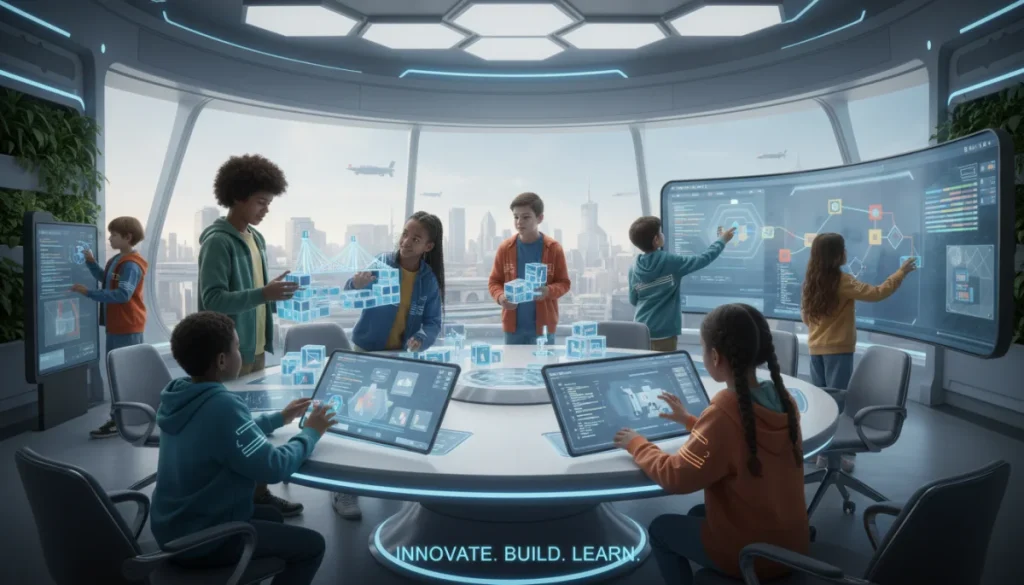
To future-proof your child’s education, focus on cultivating adaptability, critical thinking, and digital literacy, which are critical skills for the 2026 job market.
Preparing children for an unpredictable future is a paramount concern for parents today. Understanding how to equip them with the right tools is essential, and focusing on future-proofing your child’s education by developing critical skills for the 2026 job market offers a clear roadmap.
The Evolving Landscape of Work: Why Traditional Education Isn’t Enough
The world of work is undergoing a seismic shift, driven by rapid technological advancements and global interconnectedness. Traditional education, often focused on rote memorization and standardized testing, struggles to keep pace with these changes. Parents and educators must recognize that what was once sufficient for career success is no longer adequate for the demands of tomorrow.
We are witnessing an acceleration in automation, artificial intelligence, and new forms of collaboration. This transformation means that jobs requiring repetitive tasks are increasingly being replaced, while roles demanding complex problem-solving, creativity, and human interaction are growing in importance. Understanding this fundamental shift is the first step in rethinking educational priorities for our children.
The Impact of Technology on Job Roles
Technological innovation is not just changing how we work; it’s redefining the very nature of job roles. Many professions that exist today may be obsolete by 2026, while entirely new ones will emerge. This necessitates a proactive approach to skill development rather than a reactive one.
- Automation: Routine tasks in manufacturing, administration, and even some service industries are highly susceptible to automation.
- Artificial Intelligence: AI is augmenting human capabilities in fields like data analysis, healthcare, and customer service, requiring new forms of human-AI collaboration.
- Remote Work: The global shift towards remote and hybrid work models demands strong self-management, communication, and digital collaboration skills.
The implication is clear: education must move beyond merely imparting knowledge to fostering a dynamic set of capabilities that allow individuals to learn, unlearn, and relearn throughout their lives. This adaptability is perhaps the most fundamental skill for navigating an uncertain future.
In conclusion, the current educational paradigm, while valuable, needs significant recalibration to address the realities of the 2026 job market. Recognizing the profound influence of technology and globalization is crucial for parents aiming to provide their children with a truly future-proof education.
Critical Skill 1: Adaptability and Lifelong Learning
In a world characterized by constant change, the ability to adapt and embrace lifelong learning stands out as a paramount skill. The notion that one learns a trade and practices it for a lifetime is largely outdated. Instead, individuals must be prepared to continuously acquire new knowledge, master new tools, and adjust to evolving professional environments.
Adaptability isn’t just about coping with change; it’s about thriving within it. This involves a mindset of curiosity, resilience, and a willingness to step outside one’s comfort zone. For children, fostering this skill means encouraging exploration, celebrating mistakes as learning opportunities, and exposing them to diverse experiences.
Cultivating a Growth Mindset
A significant component of adaptability is having a growth mindset, a concept popularized by Dr. Carol Dweck. This perspective believes that abilities and intelligence can be developed through dedication and hard work, rather than being fixed traits. Encouraging children to see challenges as opportunities for growth rather than insurmountable obstacles is vital.
- Embrace challenges: Teach children to view difficult tasks as chances to learn and improve.
- Persistence: Instill the value of perseverance when faced with setbacks, emphasizing effort over immediate results.
- Learning from criticism: Help them understand that constructive feedback is a tool for development, not a personal attack.
Lifelong learning extends beyond formal education, encompassing continuous self-improvement through online courses, workshops, mentorship, and self-study. Equipping children with the tools and motivation for autonomous learning will serve them well in any future career path.
Ultimately, adaptability and a commitment to lifelong learning are not just desirable traits; they are essential survival skills for the dynamic job market of 2026. Parents play a pivotal role in nurturing these qualities from an early age, setting the foundation for resilient and successful individuals.
Critical Skill 2: Critical Thinking and Problem-Solving
At the heart of navigating complexity and driving innovation lies critical thinking and problem-solving. These are not merely academic exercises but practical skills that empower individuals to analyze information, evaluate arguments, and devise effective solutions to novel challenges. In a world saturated with data and misinformation, the ability to discern truth and make sound judgments is more important than ever.
The 2026 job market will place a premium on individuals who can go beyond surface-level understanding, question assumptions, and approach problems systematically. This involves breaking down complex issues into manageable parts, considering multiple perspectives, and thinking creatively about potential solutions.
Developing Analytical Prowess
Fostering critical thinking in children starts with encouraging curiosity and asking ‘why.’ Instead of providing immediate answers, guide them to explore and discover solutions independently. Engage them in discussions that require them to justify their reasoning and consider counterarguments.
- Questioning: Encourage children to ask probing questions about everything they encounter.
- Evidence-based reasoning: Teach them to seek and evaluate evidence before forming conclusions.
- Logical deduction: Provide opportunities for puzzles, games, and activities that require logical thinking.
Problem-solving, a direct application of critical thinking, involves identifying problems, brainstorming solutions, evaluating their feasibility, and implementing the best course of action. These skills are not confined to STEM fields; they are crucial in every profession, from marketing to healthcare, where innovative solutions are constantly required.
By nurturing critical thinking and problem-solving, parents are not just preparing children for specific jobs, but for a lifetime of intellectual engagement and effective decision-making. These abilities form the bedrock of intellectual autonomy and professional competence.
Critical Skill 3: Digital Literacy and Computational Thinking
In an increasingly digitized world, digital literacy and computational thinking are no longer optional but fundamental. Digital literacy extends beyond merely using technology; it encompasses understanding how technology works, its ethical implications, and how to leverage it effectively for communication, collaboration, and creation. Computational thinking, on the other hand, is a problem-solving approach that involves breaking down complex problems into smaller, more manageable parts, a skill highly relevant for the digital age.
The 2026 job market will demand proficiency in navigating digital environments, understanding data, and interacting with artificial intelligence. Children who develop these skills early will have a significant advantage, not just in tech-specific roles, but across all industries that increasingly rely on digital tools and data-driven decisions.
Navigating the Digital Landscape Responsibly
Digital literacy involves not only technical skills but also critical awareness of online safety, privacy, and the responsible use of digital platforms. Teaching children to be discerning consumers and ethical creators of digital content is paramount in preventing misinformation and fostering positive online citizenship.
- Online safety: Educate children about privacy settings, identifying phishing attempts, and responsible sharing of personal information.
- Information evaluation: Teach them to critically assess the credibility of online sources and identify fake news.
- Digital footprint: Discuss the long-term implications of their online actions and how to manage their digital identity.
Computational thinking, often introduced through coding or robotics, cultivates a systematic way of thinking about problems. It involves decomposition (breaking down problems), pattern recognition, abstraction (identifying general principles), and algorithms (developing step-by-step solutions). These skills are transferable to many non-coding contexts, enhancing logical reasoning and efficiency.

By embracing digital literacy and computational thinking, children are not just learning how to use technology; they are learning how to think like innovators and creators in the digital age. This foundational understanding will empower them to adapt to new technologies and contribute meaningfully to future industries.
Integrating Skills into Everyday Learning
Developing these critical skills isn’t about adding more subjects to an already packed curriculum; it’s about integrating them into everyday learning experiences. Parents and educators can weave adaptability, critical thinking, and digital literacy into existing activities, making learning more engaging and relevant. This holistic approach ensures that skill development becomes a natural part of a child’s growth, rather than an isolated effort.
From playtime to homework, opportunities abound to foster these capabilities. The key is to shift the focus from merely memorizing facts to actively engaging with concepts, solving real-world problems, and exploring new ideas with curiosity and an open mind.
Practical Strategies for Parents
Parents are powerful facilitators of skill development. Simple changes in daily routines and interactions can make a profound difference in how children approach learning and challenges.
- Encourage open-ended play: Activities that require imagination and problem-solving, such as building with blocks or creating stories, foster critical thinking.
- Involve them in decision-making: Let children contribute to family decisions, explaining their reasoning and considering different outcomes.
- Explore technology together: Engage in educational apps, coding games, or online research with your child, discussing the digital tools and their applications.
Furthermore, providing a supportive environment where experimentation is encouraged and mistakes are viewed as learning opportunities is crucial. This helps build resilience and a willingness to tackle new challenges, reinforcing the importance of adaptability.
By consciously integrating these skills into daily life, parents can ensure that their children are not just learning academic content, but also developing the essential competencies needed to thrive in the dynamic and ever-changing landscape of the 2026 job market.
The Role of Educators and Educational Systems
While parental involvement is crucial, the broader educational system plays an indispensable role in preparing children for the future. Schools, curricula, and teaching methodologies must evolve to prioritize skill development over mere content delivery. This requires a systemic shift that empowers educators and provides them with the resources to implement innovative teaching practices.
Educational institutions need to foster environments that encourage collaboration, critical inquiry, and creative expression. Moving away from standardized, one-size-fits-all approaches towards personalized learning paths that cater to individual strengths and interests will be key to unlocking each child’s full potential.
Reforming Curricula and Teaching Methods
Curriculum reform is essential to integrate future-focused skills across all subjects. This means embedding critical thinking in history lessons, problem-solving in science experiments, and digital literacy in art projects. Teachers, in turn, need professional development that equips them with the pedagogical tools to facilitate these skills effectively.
- Project-based learning: Implement projects that require students to apply knowledge, collaborate, and solve real-world problems.
- Inquiry-based learning: Encourage students to ask questions, research topics independently, and construct their own understanding.
- Technology integration: Use digital tools not just for consumption, but for creation, collaboration, and computational thinking exercises.
Moreover, assessment methods should also evolve to measure skill proficiency rather than just content recall. This could involve portfolios, presentations, and practical demonstrations of problem-solving abilities. The goal is to create a symbiotic relationship between parents, educators, and the curriculum, all working towards the common goal of future-proofing children’s education.
The transformation of educational systems is a collective responsibility. By advocating for and supporting these changes, communities can ensure that their children receive an education that truly prepares them for the opportunities and challenges of the 2026 job market and beyond.
Building a Foundation for Future Success
Ultimately, future-proofing your child’s education is about more than just preparing them for a specific career; it’s about equipping them with the resilience, ingenuity, and intellectual agility to navigate any challenge life throws their way. The three critical skills—adaptability and lifelong learning, critical thinking and problem-solving, and digital literacy and computational thinking—form the bedrock of this preparation.
These skills are interconnected and mutually reinforcing. A child who is adaptable will be more willing to learn new digital tools, and a child with strong critical thinking skills will be better at solving complex problems encountered in a digital environment. It is this synergy that truly empowers them for the future.
The Long-Term Benefits of Skill-Based Education
Investing in skill-based education yields dividends far beyond immediate academic success. Children who develop these competencies are not only more likely to excel in their chosen professions but also to become engaged citizens, creative innovators, and lifelong contributors to society. They will possess the agency to shape their own futures rather than merely react to external circumstances.
- Career resilience: The ability to pivot and learn new skills ensures relevance in a changing job market.
- Personal growth: Critical thinking and adaptability foster self-awareness and personal development.
- Societal contribution: Digitally literate and problem-solving individuals are better equipped to address global challenges.
The journey of future-proofing a child’s education is a continuous one, requiring ongoing commitment from parents, educators, and the children themselves. By focusing on these critical skills, we are not just preparing them for 2026, but for a lifetime of success, fulfillment, and meaningful impact.
The future may be uncertain, but by prioritizing these foundational skills, we can provide our children with the confidence and capabilities to embrace it with optimism and competence.
| Key Skill | Brief Description |
|---|---|
| Adaptability & Lifelong Learning | Ability to adjust to new situations, embrace change, and continuously acquire new knowledge throughout life. |
| Critical Thinking & Problem-Solving | Capacity to analyze information, evaluate arguments, and develop effective solutions to complex challenges. |
| Digital Literacy & Computational Thinking | Understanding and effectively using technology, along with the ability to break down problems systematically. |
| Emotional Intelligence | Recognizing and managing one’s own emotions, and understanding the emotions of others for effective interactions. |
Frequently Asked Questions About Future-Proofing Education
Traditional education frequently focuses on rote memorization and standardized testing, which doesn’t adequately prepare children for a rapidly evolving job market demanding adaptability, critical thinking, and digital proficiency. The emphasis needs to shift towards dynamic skill development over static knowledge acquisition.
Parents can foster adaptability by encouraging a growth mindset, celebrating mistakes as learning opportunities, and exposing children to diverse experiences. Promote curiosity, resilience, and a willingness to explore new ideas and challenges, emphasizing continuous self-improvement and learning from feedback.
Computational thinking is a problem-solving approach involving breaking down complex problems, recognizing patterns, abstracting general principles, and developing step-by-step solutions. It’s crucial because it enhances logical reasoning and efficiency, empowering children to approach challenges systematically in both digital and non-digital contexts.
Schools can integrate these skills through project-based learning, inquiry-based approaches, and purposeful technology integration. This means embedding critical thinking in all subjects, encouraging collaborative problem-solving, and utilizing digital tools for creation and analysis, rather than just consumption, to foster deeper understanding.
A skill-based education offers career resilience, personal growth, and enhanced societal contribution. Children develop intellectual agility, self-awareness, and the ability to adapt to life’s challenges. These competencies empower them to become engaged citizens, creative innovators, and lifelong contributors, shaping their own futures effectively.
Conclusion
The journey of future-proofing your child’s education is a proactive and essential endeavor in today’s rapidly changing world. By deliberately cultivating adaptability and lifelong learning, critical thinking and problem-solving, and digital literacy and computational thinking, parents and educators provide children with more than just academic knowledge. They equip them with the foundational skills to navigate uncertainty, embrace innovation, and thrive in the dynamic 2026 job market and beyond. This holistic approach ensures that the next generation is not merely prepared for the future, but empowered to actively shape it.
The future may be uncertain, but by prioritizing these foundational skills, we can provide our children with the confidence and capabilities to embrace it with optimism and competence.
