2026 Mortgage Rates: Fixed vs. Adjustable Options
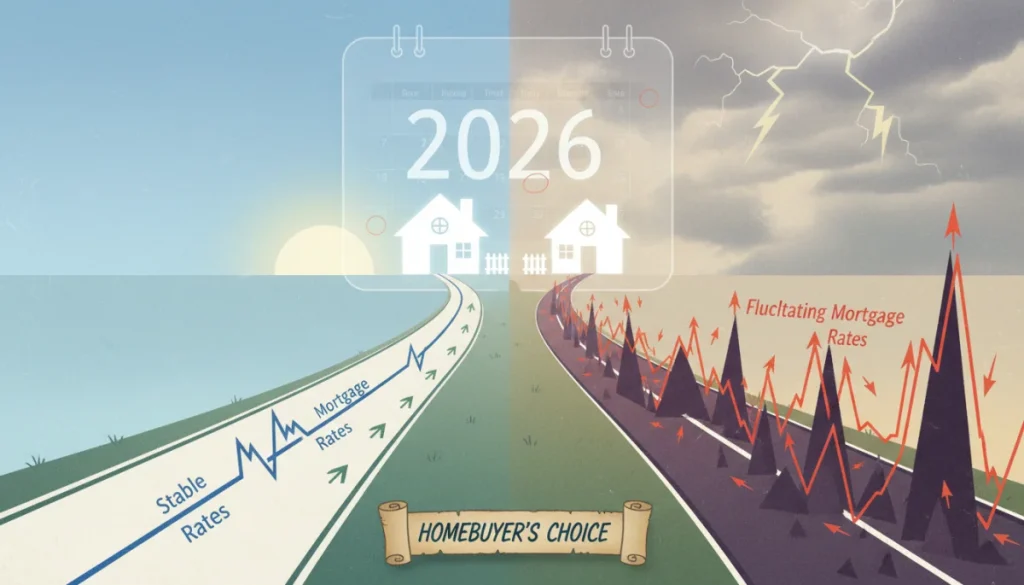
For U.S. homebuyers in 2026, understanding the differences between fixed-rate and adjustable-rate mortgages is crucial for making a sound financial decision amidst evolving market conditions.
As we look towards 2026, navigating the housing market requires a clear understanding of mortgage options. For U.S. homebuyers, the choice between fixed and adjustable rates in the context of 2026 mortgage rates will significantly impact long-term financial stability and homeownership costs. This guide aims to demystify these options, helping you make an informed decision for your future home.
Understanding Fixed-Rate Mortgages in 2026
A fixed-rate mortgage, as its name suggests, locks in an interest rate for the entire duration of the loan. This means your monthly principal and interest payments remain constant, offering predictability and stability regardless of market fluctuations. For many homebuyers, this consistency is a significant advantage, especially in uncertain economic climates.
The Appeal of Predictability
In 2026, economic forecasts suggest a landscape that could still present volatility. A fixed-rate mortgage acts as a financial anchor, shielding homeowners from potential rate hikes. This stability allows for precise budgeting and long-term financial planning, which is invaluable for families and individuals seeking peace of mind.
- Budgeting Certainty: Knowing your exact monthly payment makes financial planning straightforward.
- Protection from Rate Increases: If market rates rise, your payment remains unchanged, saving you money.
- Simplicity: Fixed rates are generally easier to understand and manage compared to adjustable options.
However, the trade-off for this stability is that if market rates fall significantly, you won’t automatically benefit unless you refinance. Refinancing incurs additional costs and involves a new application process, which might not always be worthwhile depending on the rate difference and remaining loan term. It’s a decision that requires careful consideration of current rates versus potential future savings.
The long-term security provided by fixed-rate mortgages makes them a popular choice, especially for those planning to stay in their homes for an extended period. The peace of mind from knowing your housing costs won’t unexpectedly increase can outweigh the potential for lower payments with an ARM if rates drop.
Exploring Adjustable-Rate Mortgages (ARMs) in 2026
Adjustable-rate mortgages, or ARMs, offer an initial period with a fixed interest rate, after which the rate adjusts periodically based on a chosen market index. These initial fixed periods can range from 3, 5, 7, or even 10 years. After this period, your monthly payments can go up or down, reflecting changes in the market index.
The Dynamics of ARM Structures
The structure of an ARM typically includes a margin, which is a fixed percentage added to the index rate, and caps that limit how much the interest rate can change during each adjustment period and over the life of the loan. Understanding these components is critical for assessing the potential risks and rewards of an ARM in 2026.
- Initial Lower Rates: ARMs often start with lower interest rates than fixed-rate mortgages, making initial payments more affordable.
- Potential for Lower Payments: If market rates decrease, your payments could also fall, saving you money.
- Flexibility for Short-Term Ownership: Ideal for buyers who plan to sell or refinance before the fixed-rate period ends.
The allure of a lower initial interest rate can be strong, especially for first-time homebuyers or those with a clear plan to move or refinance within a few years. However, the risk lies in the uncertainty of future interest rates. If rates climb, your monthly payments could become significantly higher, potentially straining your budget.
In 2026, economic indicators and Federal Reserve policies will heavily influence the direction of interest rates. Homebuyers considering an ARM should thoroughly research market predictions and ensure they have a financial buffer to absorb potential payment increases. This careful planning is essential to harness the benefits of an ARM while mitigating its inherent risks.
Key Factors Influencing 2026 Mortgage Rates
Several macroeconomic factors will shape 2026 mortgage rates, influencing both fixed and adjustable options. Understanding these elements is crucial for anticipating market movements and making strategic decisions about home financing.
Economic Indicators and Federal Reserve Policy
The Federal Reserve’s monetary policy, particularly its stance on interest rates, plays a significant role. If the Fed continues to raise or hold rates high to combat inflation, mortgage rates will likely follow suit. Conversely, if economic growth slows and inflation is under control, the Fed might consider rate cuts, which could lead to lower mortgage rates.

Inflation is another critical factor. High inflation typically prompts central banks to raise rates to cool down the economy, directly impacting borrowing costs. Employment figures, GDP growth, and consumer confidence also provide insights into the overall health of the economy, which in turn affects bond yields and, consequently, mortgage rates.
- Inflation Trends: Sustained high inflation puts upward pressure on rates.
- Federal Reserve Decisions: Changes in the federal funds rate directly influence mortgage rates.
- Economic Growth: Strong economic performance can sometimes lead to higher rates as demand for credit increases.
Geopolitical events and global economic stability can also introduce volatility. Unexpected global crises or significant policy shifts in major economies can create ripple effects that influence U.S. financial markets, including mortgage rates. Staying informed about these broader trends is part of a comprehensive approach to securing a mortgage in 2026.
Ultimately, the interplay of these factors creates a dynamic environment for mortgage rates. Homebuyers should monitor reputable financial news sources and consult with mortgage professionals to gain a current perspective on market conditions and future projections.
Pros and Cons: Fixed vs. Adjustable for U.S. Homebuyers
Deciding between a fixed-rate and an adjustable-rate mortgage involves weighing their distinct advantages and disadvantages against your personal financial situation and future plans. This comparison is particularly relevant for U.S. homebuyers evaluating 2026 mortgage rates.
Advantages of Fixed-Rate Mortgages
- Stable Payments: Monthly payments remain constant, simplifying budgeting.
- Predictable Costs: Total interest paid over the loan term is known from the start.
- Peace of Mind: No worries about future rate increases, regardless of market conditions.
Disadvantages of Fixed-Rate Mortgages
- Higher Initial Rates: Often start with a slightly higher interest rate than ARMs.
- Missed Opportunities: Cannot benefit from falling market rates without refinancing.
- Less Flexible: May not be ideal for those planning to move in a few years.
Advantages of Adjustable-Rate Mortgages
- Lower Initial Rates: Can result in lower monthly payments during the initial fixed period.
- Potential Savings: Payments can decrease if market rates fall after the adjustment period.
- Suitability for Short-Term Ownership: Beneficial if you plan to sell or refinance before the rate adjusts.
Disadvantages of Adjustable-Rate Mortgages
- Payment Uncertainty: Monthly payments can increase significantly after the initial fixed period.
- Budget Volatility: Makes long-term financial planning more challenging.
- Complexity: Understanding caps, margins, and indices requires more research.
The choice ultimately depends on your risk tolerance, how long you plan to stay in the home, and your personal financial outlook. For those prioritizing stability and long-term planning, a fixed-rate mortgage might be more appealing. If you’re comfortable with some risk and foresee a shorter tenure in the home, an ARM could offer initial savings.
Making the Right Choice for Your Home in 2026
The decision between a fixed-rate and an adjustable-rate mortgage for your 2026 home purchase is a personal one, deeply intertwined with your financial goals, risk tolerance, and expectations for the future. There isn’t a universally ‘best’ option; rather, it’s about finding the mortgage that best fits your unique circumstances.
Assessing Your Financial Situation
Before committing, evaluate your current income stability, savings, and future earning potential. Can you comfortably absorb potential increases in monthly payments if you choose an ARM? Or do you prioritize the predictable budgeting a fixed-rate mortgage provides? Consider your emergency fund and overall debt-to-income ratio.
- Evaluate Income Stability: How secure is your job and income stream?
- Assess Risk Tolerance: Are you comfortable with potential payment fluctuations?
- Consider Future Plans: Do you plan to stay in the home for a long time or move within a few years?
Think about your long-term financial goals. If you aim to pay off your mortgage quickly or have significant investments planned, the initial lower rates of an ARM might free up capital. However, if stability and a clear path to homeownership without surprises are your priorities, a fixed-rate mortgage offers that security.
Consulting with a qualified mortgage advisor is highly recommended. They can provide personalized insights into 2026 mortgage rates, analyze your financial profile, and help you understand the nuances of each loan product. They can also help you project potential payment scenarios under different market conditions, aiding in a truly informed decision.
Your credit score, down payment amount, and debt-to-income ratio will also influence the rates and terms you qualify for. Working on improving these aspects can give you access to more favorable mortgage options, regardless of whether you choose a fixed or adjustable rate.
Refinancing Considerations for 2026
Even if you’re not a first-time homebuyer, 2026 could be a pivotal year for refinancing existing mortgages. Changes in market conditions and personal financial situations might present opportunities to secure more favorable terms, whether you currently have a fixed or adjustable-rate loan.
When to Consider Refinancing
Refinancing makes sense when current interest rates are significantly lower than your existing mortgage rate, or if you wish to change your loan term (e.g., from a 30-year to a 15-year mortgage). For those with ARMs, refinancing into a fixed-rate mortgage before the adjustment period begins can provide stability and protection against rising rates.
- Lower Interest Rates: If current rates are notably lower than your existing rate.
- Change Loan Term: To shorten your loan term and save on total interest, or extend it for lower monthly payments.
- Switch Loan Types: Convert an ARM to a fixed-rate mortgage for predictability.
The costs associated with refinancing, such as closing costs, appraisal fees, and legal fees, must be factored into your decision. It’s essential to calculate whether the long-term savings from a lower interest rate or different loan terms outweigh these upfront expenses. A break-even analysis can help determine if refinancing is financially beneficial for you.
For homeowners with adjustable-rate mortgages approaching their adjustment period, 2026 could be a crucial window to lock in a fixed rate, especially if market forecasts suggest an upward trend in interest rates. This strategic move can provide long-term payment stability and peace of mind.
Before making a decision, gather quotes from multiple lenders and carefully compare their offers. Pay attention not only to the interest rate but also to the fees and closing costs. A slightly higher rate with lower fees might sometimes be more advantageous than a rock-bottom rate with significant upfront expenses.
| Key Point | Brief Description |
|---|---|
| Fixed-Rate Mortgage | Offers stable, predictable monthly payments for the entire loan term, shielding against rate hikes. |
| Adjustable-Rate Mortgage (ARM) | Features an initial fixed rate, then adjusts periodically based on market indices, offering potential for lower initial payments. |
| Influencing Factors | 2026 mortgage rates are shaped by Federal Reserve policy, inflation, economic growth, and global events. |
| Refinancing in 2026 | Consider refinancing for lower rates, changing loan terms, or converting ARMs to fixed rates. |
Frequently Asked Questions About 2026 Mortgage Rates
Fixed-rate mortgages offer a consistent interest rate and predictable monthly payments for the entire loan term. Adjustable-rate mortgages (ARMs) start with a fixed rate for an initial period, then adjust periodically based on market indices, meaning payments can fluctuate.
2026 mortgage rates will be heavily influenced by the Federal Reserve’s monetary policy, inflation trends, overall economic growth, and employment data. Geopolitical events can also introduce volatility, making market monitoring essential for homebuyers.
Homebuyers planning to stay in their homes for many years and those who prioritize payment stability and predictable budgeting should consider a fixed-rate mortgage. It offers protection against rising interest rates throughout the loan’s duration.
An ARM might be suitable for homebuyers who plan to sell or refinance their home before the initial fixed-rate period ends. It can also be attractive to those comfortable with some risk and who can afford potential payment increases if market rates rise.
Refinancing in 2026 could be beneficial if current rates are lower than your existing mortgage, or if you want to change your loan term or switch from an ARM to a fixed-rate loan. Always weigh the potential savings against the associated closing costs.
Conclusion
As U.S. homebuyers navigate the complexities of the 2026 housing market, the choice between a fixed-rate and an adjustable-rate mortgage stands as a critical financial decision. Both options present distinct advantages and risks, shaped by prevailing economic conditions, Federal Reserve policies, and individual financial circumstances. A fixed-rate mortgage offers unparalleled stability and predictability, ideal for long-term homeowners seeking peace of mind. Conversely, an adjustable-rate mortgage can provide lower initial payments and flexibility for those with shorter-term ownership plans or a higher tolerance for market fluctuations. Ultimately, making the right choice requires thorough research, a clear understanding of your personal financial goals, and often, the guidance of a trusted mortgage professional. By carefully evaluating all factors, homebuyers can secure a mortgage that aligns with their future aspirations and ensures long-term financial well-being.
