2026 Crypto Regulations: Impact on U.S. Investors

New 2026 cryptocurrency regulations in the U.S. are set to significantly reshape the digital asset landscape for investors, influencing market dynamics, tax obligations, and compliance requirements.
The digital asset space has long been a frontier of innovation and speculation, attracting millions of investors worldwide. However, as cryptocurrencies mature, so does the call for clear regulatory frameworks. In the United States, the year 2026 is poised to be a landmark year with the introduction of comprehensive new regulations. The profound impact of new 2026 cryptocurrency regulations on U.S. investors cannot be overstated, promising to redefine how digital assets are bought, sold, held, and reported.
Understanding the Regulatory Landscape Shift
The cryptocurrency market, characterized by its rapid evolution and decentralized nature, has largely operated in a regulatory gray area for many years. This has presented both opportunities for growth and significant risks for investors. The upcoming 2026 regulations aim to bring much-needed clarity and stability to this dynamic sector, fundamentally altering how U.S. investors interact with digital assets.
Historically, regulatory bodies have struggled to categorize and oversee cryptocurrencies effectively. Are they commodities, securities, or something entirely new? This ambiguity has led to inconsistent enforcement and a lack of investor protection. The 2026 framework seeks to resolve these foundational questions, establishing clear definitions and assigning oversight responsibilities to specific agencies.
Key Drivers Behind the 2026 Regulations
Several factors are propelling the push for more robust crypto regulations. Investor protection is paramount, as numerous scams and market manipulations have highlighted the vulnerabilities within the unregulated space. Moreover, concerns about financial stability, given the growing market capitalization of digital assets, have prompted governmental bodies to act. The need to combat illicit financial activities, such as money laundering and terrorist financing, also plays a crucial role in shaping these new rules.
- Investor Protection: Safeguarding individuals from fraud and market volatility.
- Financial Stability: Mitigating systemic risks posed by a rapidly expanding crypto market.
- Anti-Money Laundering (AML) & Counter-Terrorist Financing (CTF): Preventing illegal use of digital assets.
- Tax Compliance: Ensuring proper reporting and collection of taxes on crypto gains.
The shift towards a more regulated environment is not just about control; it’s about legitimizing the asset class and integrating it more seamlessly into the broader financial system. For U.S. investors, this means a future with potentially less risk but also more stringent compliance requirements.
Tax Implications for U.S. Crypto Investors
One of the most immediate and significant changes for U.S. investors under the 2026 regulations will be in the realm of taxation. The IRS has long considered cryptocurrency as property for tax purposes, but the new rules are expected to provide more explicit guidance and enhanced enforcement mechanisms. This will likely lead to a more standardized approach to reporting crypto gains and losses, closing existing loopholes.
Investors should prepare for more detailed reporting requirements from exchanges and other crypto service providers. The new regulations may mandate that these entities track and report transaction data directly to the IRS, similar to traditional brokerage firms. This increased transparency will make it harder for investors to avoid their tax obligations, ensuring a more equitable collection of revenue from the digital asset space.
Understanding Capital Gains and Income Tax on Crypto
Under current and anticipated regulations, capital gains tax applies when an investor sells, trades, or otherwise disposes of cryptocurrency for a profit. The tax rate depends on how long the asset was held (short-term vs. long-term). Income tax applies to crypto received as payment for goods or services, mining rewards, or staking rewards. The 2026 regulations are expected to clarify nuances around these events, potentially introducing new categories or thresholds.
- Short-Term Capital Gains: Applicable to assets held for one year or less, taxed at ordinary income rates.
- Long-Term Capital Gains: Applicable to assets held for over one year, taxed at preferential rates.
- Income Tax: Applies to crypto earned through various activities, reported as ordinary income.
The introduction of clearer guidelines might also affect how losses are treated, potentially offering more straightforward ways to offset gains. However, the overarching theme will be one of increased scrutiny and a reduced tolerance for non-compliance. Investors will need to maintain meticulous records of all their crypto transactions to navigate these new tax landscapes effectively.
Impact on Crypto Exchanges and Service Providers
The new 2026 cryptocurrency regulations will profoundly reshape the operational landscape for crypto exchanges, custodians, and other service providers operating in the U.S. These entities will face heightened scrutiny and stricter compliance mandates, fundamentally altering how they conduct business and interact with their U.S. customer base. Expect to see significant investments in regulatory technology (RegTech) and compliance departments across the industry.
Many unregulated or lightly regulated platforms may find it challenging to meet the new standards, potentially leading to market consolidation. Exchanges that prioritize compliance and robust security measures will likely gain a competitive edge, attracting investors seeking regulated and trustworthy platforms. This shift could also encourage more traditional financial institutions to enter the crypto space, as the regulatory clarity reduces their perceived risk.
Enhanced KYC and AML Procedures
One of the most prominent changes will be the reinforcement of Know Your Customer (KYC) and Anti-Money Laundering (AML) protocols. Exchanges will be required to collect more comprehensive identity verification data from users and monitor transactions more rigorously for suspicious activity. This will make it significantly more difficult for bad actors to use cryptocurrencies for illicit purposes, but it will also introduce more friction for legitimate users.
- Stricter Identity Verification: More thorough collection of personal information from users.
- Transaction Monitoring: Advanced systems to detect and report suspicious transactions.
- Reporting Requirements: Mandatory reporting of certain transaction thresholds to regulatory bodies.
For investors, this means a more secure environment, but also a more formalized onboarding process and potentially longer wait times for certain transactions. The balance between security and user experience will be a key challenge for service providers to navigate under the new regulatory regime.
Investment Strategies and Market Dynamics
The impending 2026 regulations are expected to induce notable shifts in investment strategies and overall market dynamics within the U.S. cryptocurrency sector. As the regulatory environment becomes more defined, investors will likely adapt their portfolios and approaches to align with the new compliance requirements and risk profiles. This could lead to a maturation of the market, moving away from purely speculative investments towards more fundamentally sound and compliant digital assets.
Initial reactions to new regulations can often involve short-term volatility as the market adjusts to the implications. However, in the long run, increased regulatory clarity is widely anticipated to foster greater institutional adoption and attract a broader base of traditional investors who have previously been hesitant due to uncertainty. This influx of capital could stabilize prices and lead to more sustainable growth, albeit potentially with reduced extreme price swings.
Diversification and Compliance-Focused Investing
U.S. investors might increasingly prioritize digital assets that demonstrate strong compliance frameworks or are issued by regulated entities. This could favor established cryptocurrencies with clear use cases and those backed by robust development teams. Diversification strategies may also evolve to include a mix of traditional assets and compliant digital assets, carefully balancing risk and return within the new regulatory parameters.
- Shift Towards Compliant Assets: Preference for cryptocurrencies adhering to new rules.
- Increased Institutional Participation: More traditional financial firms entering the crypto space.
- Long-Term Holding Strategies: A potential move away from short-term trading due to reporting burdens.
Furthermore, the regulations might spur innovation in security tokens and other regulated digital financial products, offering new avenues for investors seeking exposure to blockchain technology within a compliant framework. Investors will need to stay informed and potentially seek professional advice to navigate these evolving market dynamics effectively.
Consumer Protection and Investor Confidence
A primary objective of the new 2026 cryptocurrency regulations is to bolster consumer protection and, consequently, enhance investor confidence in the digital asset market. For too long, the crypto space has been plagued by scams, rug pulls, and inadequate recourse for investors who have lost funds. The forthcoming framework aims to address these vulnerabilities by establishing clearer legal definitions, imposing stricter operational standards, and creating mechanisms for dispute resolution.
By defining what constitutes a security or commodity in the crypto sphere, regulators can apply existing laws to digital assets, offering familiar protections to investors. This clarity is expected to reduce the incidence of fraudulent projects and improve the overall integrity of the market. Knowing that there are established rules and avenues for redress can significantly alleviate the fears that have kept many potential investors on the sidelines.
Safeguards Against Market Manipulation and Fraud
The regulations are expected to introduce specific measures to combat market manipulation, such as pump-and-dump schemes and insider trading, which have been rampant in less regulated environments. Enhanced surveillance capabilities and reporting requirements will empower regulatory bodies to detect and act upon suspicious activities more effectively. This proactive approach aims to create a fairer trading environment for all participants.
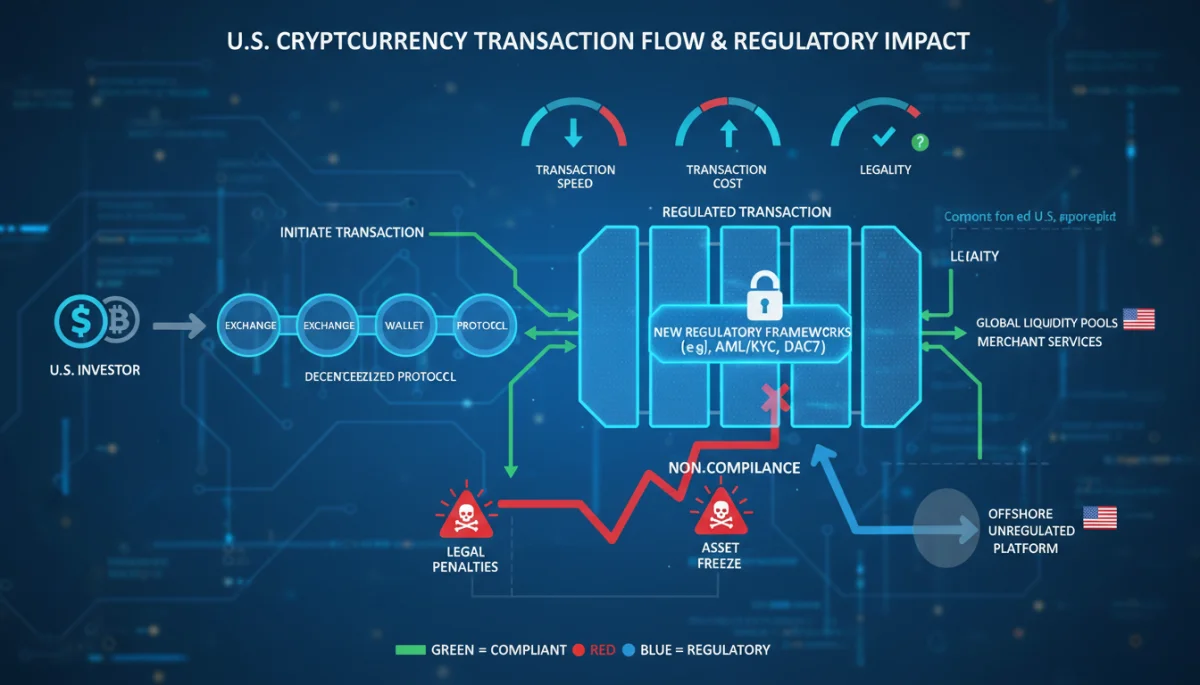
- Clearer Legal Definitions: Categorizing digital assets to apply relevant existing laws.
- Dispute Resolution Mechanisms: Providing avenues for investors to seek recourse.
- Anti-Manipulation Rules: Measures to prevent fraudulent trading practices.
Ultimately, these protections are designed to foster an environment where investors can participate in the crypto market with greater peace of mind, knowing that a robust regulatory safety net is in place. This increased trust is crucial for the long-term growth and mainstream adoption of cryptocurrencies in the U.S.
The Role of Decentralized Finance (DeFi) in the New Era
The emergence of Decentralized Finance (DeFi) has presented a unique challenge to regulators, given its inherent lack of centralized intermediaries. The 2026 regulations will likely grapple with how to oversee DeFi protocols without stifling innovation or compromising the core tenets of decentralization. This will be a delicate balancing act, as outright bans or overly restrictive measures could push DeFi activities offshore, while a complete hands-off approach could perpetuate risks.
Expect to see a nuanced approach, perhaps focusing on the points of interaction between DeFi and the traditional financial system, such as fiat on-ramps and off-ramps, or on entities that exert significant control over ostensibly decentralized protocols. The goal will likely be to identify and mitigate systemic risks and protect consumers without dismantling the innovative potential of DeFi.
Potential Regulatory Frameworks for DeFi
Regulators might explore various strategies to bring DeFi under their purview. This could include requiring certain DeFi applications to register as financial institutions, imposing KYC/AML requirements on front-end interfaces, or holding developers accountable for the protocols they create. Stablecoins, a critical component of the DeFi ecosystem, are also expected to face stringent regulations to ensure their stability and transparency.
- Focus on Centralized Intersections: Regulating gateways between DeFi and traditional finance.
- Developer Accountability: Holding creators of protocols responsible for compliance.
- Stablecoin Oversight: Ensuring the stability and transparency of digital currencies pegged to fiat.
For U.S. investors participating in DeFi, this could mean increased transparency about the risks involved, greater clarity on legal responsibilities, and potentially a more secure environment. However, it may also lead to a more centralized and permissioned DeFi landscape, which could be a departure from its original ethos. The evolution of DeFi under these new regulations will be a critical area to watch.
Preparing for the Future: Advice for U.S. Investors
As the 2026 cryptocurrency regulations draw nearer, U.S. investors must proactively prepare for the changes to safeguard their investments and ensure compliance. This preparation involves a combination of education, strategic planning, and potentially seeking professional guidance. Ignoring the impending regulatory shift could lead to significant financial penalties, missed opportunities, or unforeseen complications.
The first step is to stay informed about the specifics of the new laws as they are finalized and implemented. Reliable sources of information will be crucial to distinguish fact from speculation. Investors should also begin organizing their transaction records meticulously, dating back to their initial crypto acquisitions, to facilitate future tax reporting and compliance audits.
Key Steps for Investors to Take Now
Engaging with financial advisors who specialize in digital assets can provide invaluable insights into how the new regulations will specifically impact individual portfolios. These professionals can help in structuring investments to optimize for tax efficiency and regulatory adherence. Furthermore, investors should evaluate the platforms and services they use, ensuring they are reputable and committed to compliance.
- Educate Yourself: Understand the finalized regulations and their implications.
- Maintain Detailed Records: Keep comprehensive logs of all crypto transactions.
- Seek Professional Advice: Consult with tax and financial advisors specializing in crypto.
- Choose Compliant Platforms: Select exchanges and services committed to regulatory adherence.
By taking these proactive steps, U.S. investors can not only mitigate potential risks but also position themselves to capitalize on the opportunities that a more regulated and mature cryptocurrency market may present. The future of crypto investing in the U.S. will undoubtedly be different, but with careful preparation, it can also be more secure and sustainable.
| Key Impact Area | Brief Description |
|---|---|
| Taxation | Stricter reporting and enforcement for capital gains and income from crypto. |
| Exchanges & Providers | Enhanced KYC/AML, leading to consolidation and increased compliance costs. |
| Investment Strategies | Shift towards compliant assets and increased institutional adoption. |
| Consumer Protection | Greater safeguards against fraud and market manipulation, boosting confidence. |
Frequently Asked Questions About 2026 Crypto Regulations
The primary goals include enhancing investor protection, ensuring financial stability, combating illicit financial activities like money laundering, and improving tax compliance for digital asset transactions. These regulations aim to bring clarity and legitimacy to the evolving cryptocurrency market.
U.S. investors can expect more explicit guidance and enhanced enforcement from the IRS. Crypto exchanges and service providers will likely face stricter mandates to report transaction data directly, similar to traditional financial institutions, making tax obligations clearer and harder to avoid.
Yes, DeFi platforms are expected to be impacted. Regulators may focus on regulating the points where DeFi interacts with traditional finance, imposing KYC/AML requirements on front-end interfaces, or holding developers accountable. Stablecoins within DeFi are also likely to face stringent oversight.
Investors should stay informed about the new laws, meticulously maintain records of all crypto transactions, and consider consulting with tax and financial advisors specializing in digital assets. Choosing compliant exchanges and service providers will also be crucial.
Increased regulatory clarity is expected to significantly boost institutional adoption. Traditional financial firms, previously hesitant due to uncertainty, may find the clearer framework reduces perceived risks, potentially leading to greater capital influx and market stabilization.
Conclusion
The impact of new 2026 cryptocurrency regulations on U.S. investors will be transformative, ushering in an era of greater clarity, accountability, and potentially, stability. While the transition may present challenges, particularly in adapting to new tax reporting and compliance requirements, the long-term benefits of a more regulated market could outweigh the initial hurdles. Enhanced investor protection, reduced illicit activities, and increased institutional participation are all plausible outcomes. For U.S. investors, proactive engagement and informed decision-making will be paramount to navigating this evolving landscape successfully, ensuring they are well-positioned for the future of digital asset investing.
