Top 7 Free Online Resources for K-12 Learning in 2026
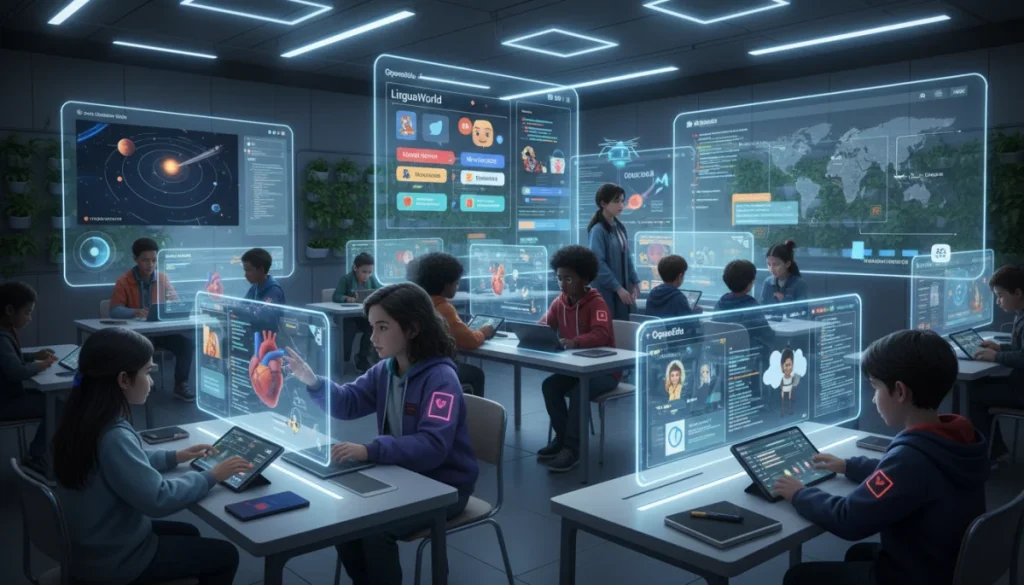
A plethora of free online resources are revolutionizing K-12 education in 2026 by offering accessible, high-quality tools that enhance learning experiences for students, parents, and educators across the United States.
The landscape of K-12 education is continually evolving, and in 2026, the integration of digital tools has become more crucial than ever. Exploring the Top 7 Free Online Resources for K-12 Learning Enhancement in 2026 offers a glimpse into how technology is democratizing education, providing unparalleled access to knowledge and skill development for students across the United States.
The evolving landscape of K-12 education in 2026
The year 2026 marks a significant period in K-12 education, characterized by an accelerated adoption of digital learning environments and a heightened demand for accessible, high-quality educational content. This shift is not merely a response to past global events but a proactive movement towards creating more resilient, equitable, and engaging learning experiences for all students.
Educational institutions, parents, and students alike are increasingly turning to online platforms to supplement traditional classroom instruction, facilitate remote learning, and provide personalized learning paths. The emphasis has moved from simply digitizing existing materials to creating interactive, adaptive, and comprehensive digital ecosystems that cater to diverse learning styles and needs.
The demand for accessible learning tools
The push for accessibility in education has never been stronger. Free online resources play a pivotal role in bridging educational gaps, ensuring that socio-economic status does not dictate access to quality learning. These platforms offer a lifeline to students in underserved communities, providing them with the same opportunities as their more advantaged peers.
- Equity in access to educational materials.
- Support for diverse learning needs and styles.
- Flexibility in learning schedules and environments.
- Empowerment of parents in their children’s education.
Technological advancements driving change
Advancements in artificial intelligence, machine learning, and virtual reality are not just buzzwords but integral components of modern educational tools. These technologies are enabling online platforms to offer personalized tutoring, immersive learning experiences, and sophisticated progress tracking, making learning more effective and enjoyable. The continuous innovation in this space ensures that the resources available in 2026 are far more advanced than those of even a few years prior.
Ultimately, the evolving landscape underscores the critical importance of identifying and leveraging the best free online resources. These tools are not just supplementary; they are becoming foundational elements of a comprehensive K-12 educational strategy, preparing students for a future that is increasingly digital and interconnected.
Khan Academy: a cornerstone for comprehensive learning
Khan Academy remains an indispensable resource for K-12 students, offering a vast library of lessons, practice exercises, and personalized learning dashboards across subjects from mathematics and science to humanities and test preparation. Its mission to provide a free, world-class education for anyone, anywhere, continues to resonate strongly in 2026, making it a pivotal tool for learning enhancement.
The platform’s strength lies in its structured approach to learning, breaking down complex topics into digestible video lessons followed by interactive practice problems. This methodology allows students to learn at their own pace, reinforcing concepts as they go and identifying areas where they need additional support. For parents and educators, Khan Academy provides robust tracking tools to monitor progress and assign specific content.
Personalized learning paths and mastery-based approach
One of Khan Academy’s most significant features is its adaptive learning system. It assesses a student’s current understanding and then tailors a learning path to fill knowledge gaps and build proficiency. This personalized approach ensures that students are challenged appropriately without being overwhelmed, fostering a sense of accomplishment as they master new skills.
- Customized learning dashboards for each student.
- Immediate feedback on practice exercises.
- Progress tracking for parents and teachers.
- Comprehensive coverage of K-12 curriculum standards.
Expanding content and community engagement
Beyond its core academic offerings, Khan Academy has steadily expanded its content to include computer programming, economics, and even life skills, reflecting the diverse needs of modern students. The platform also fosters a vibrant community where learners can ask questions and receive support, creating a collaborative learning environment that extends beyond the individual screen.
In 2026, Khan Academy continues to be a go-to resource for millions, proving that high-quality education does not need to come with a high price tag. Its commitment to continuous improvement and user-centric design ensures its relevance and effectiveness in the ever-changing educational landscape.
PBS learningmedia: enriching education with multimedia
PBS LearningMedia stands out as a premier destination for educators and students seeking free, curriculum-aligned digital resources. In 2026, it continues to leverage the trusted content of PBS and its member stations, offering an extensive collection of videos, interactives, lesson plans, and primary source materials that bring subjects to life across all K-12 grades. This platform is particularly effective in making abstract concepts tangible and engaging through high-quality multimedia.
The platform’s strength lies in its ability to connect educational content with real-world relevance, drawing from popular PBS shows and documentaries. This approach not only captures students’ attention but also deepens their understanding by providing context and diverse perspectives. Teachers find it invaluable for supplementing lessons, sparking discussions, and catering to visual and auditory learners.
Curriculum-aligned and diverse content
Every resource on PBS LearningMedia is carefully curated and aligned with national and state curriculum standards, making it easy for educators to integrate into their lesson plans. The breadth of subjects covered, from science and history to arts and literature, ensures that there is something for every classroom and every student.
- Thousands of videos, interactives, and audio clips.
- Comprehensive lesson plans and activity ideas.
- Aligned with K-12 educational standards.
- Resources categorized by grade level and subject.
Fostering critical thinking and engagement
Beyond content delivery, PBS LearningMedia is designed to foster critical thinking and active engagement. Many resources come with discussion questions, project ideas, and hands-on activities that encourage students to explore topics more deeply. This interactive approach helps students develop essential analytical skills and a lifelong love for learning.
As we move through 2026, PBS LearningMedia remains a vital tool for enriching K-12 education, transforming passive learning into an active and immersive experience. Its commitment to quality and accessibility makes it an indispensable asset for educators and students nationwide.
CK-12 foundation: flexible and adaptive learning solutions
The CK-12 Foundation offers a comprehensive platform providing free, high-quality, customizable open educational resources (OER) for K-12 students and teachers. In 2026, its FlexBooks® and interactive learning modalities continue to be a game-changer, allowing educators to tailor content to meet the specific needs of their students, moving beyond the one-size-fits-all approach of traditional textbooks.
CK-12’s innovative approach centers on its adaptive practice and concept-based learning. Students receive immediate feedback and personalized recommendations, ensuring they grasp foundational concepts before moving on to more advanced topics. This adaptability makes it an excellent resource for differentiated instruction within diverse classroom settings.
FlexBooks® and personalized learning
FlexBooks® are digital textbooks that can be customized by teachers, allowing them to add, remove, or rearrange content, and even embed their own materials. This flexibility empowers educators to create highly relevant and engaging learning experiences. The platform also offers a robust array of interactive exercises, simulations, and real-world applications that make learning dynamic.
- Customizable digital textbooks (FlexBooks®).
- Adaptive practice and intelligent tutoring.
- Interactive simulations and real-world applications.
- Content aligned with K-12 curriculum standards.
Bridging the gap with STEM education
CK-12 places a strong emphasis on STEM subjects, providing extensive resources in math, science, and technology. Its interactive simulations and hands-on activities are particularly effective in helping students visualize complex scientific principles and mathematical concepts, fostering a deeper understanding and interest in these critical fields.
By 2026, the CK-12 Foundation is recognized for its commitment to open education and its powerful tools for personalized learning. It continues to empower both educators and students to navigate the complexities of modern curricula with confidence and success.
Duolingo: making language learning accessible and fun
Duolingo has solidified its position as a leading free online platform for language acquisition, and in 2026, it remains an incredibly popular and effective tool for K-12 students. Its gamified approach to learning makes the often-challenging task of mastering a new language engaging and accessible, encouraging consistent practice through short, interactive lessons.
The platform offers courses in numerous languages, from Spanish and French to Japanese and German, catering to a wide range of interests and academic requirements. Its bite-sized lessons, immediate feedback, and progress tracking motivate students to continue their language journey, turning learning into an enjoyable daily habit rather than a chore.
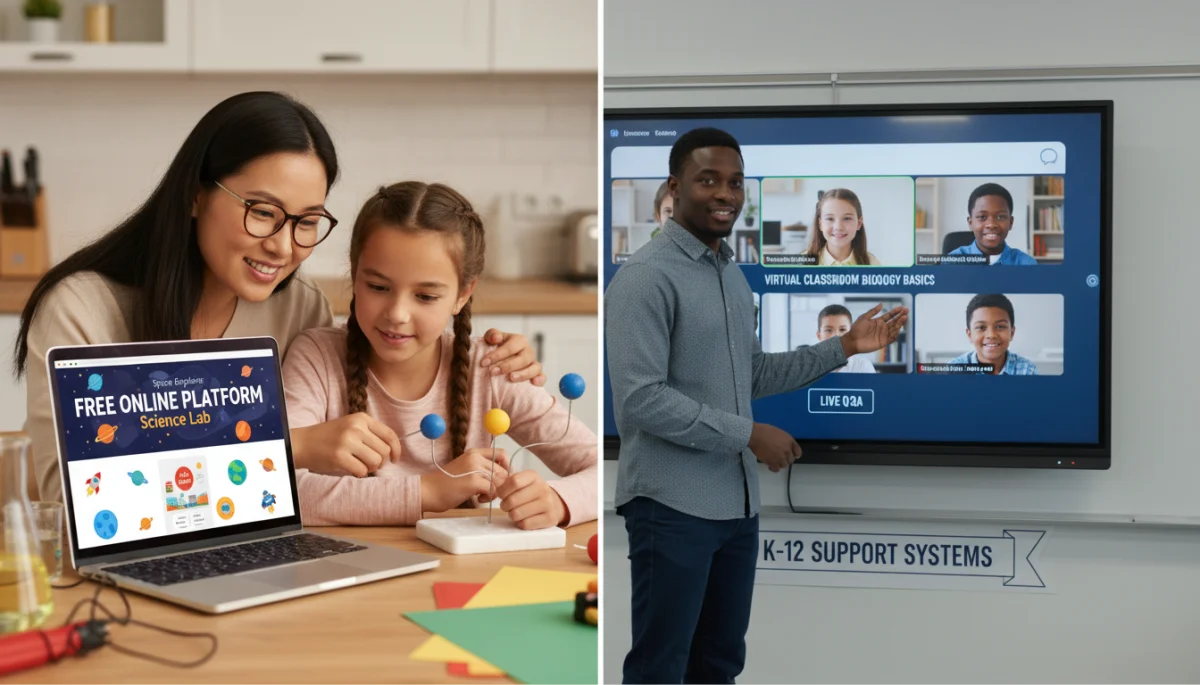
Gamified learning and motivation
Duolingo’s success is largely attributed to its innovative use of gamification. Students earn points, unlock new levels, and compete with friends, transforming language learning into an addictive and rewarding experience. This approach is particularly effective for younger learners, who thrive on positive reinforcement and clear progress indicators.
- Short, interactive lessons for daily practice.
- Gamified elements like points, streaks, and leaderboards.
- Covers a wide array of languages.
- Progress tracking and personalized feedback.
Supporting diverse language learners
Beyond its engaging interface, Duolingo is designed to support learners of all ages and proficiency levels. Its adaptive algorithms adjust the difficulty of lessons based on performance, ensuring that students are always challenged appropriately. For K-12 students, this means they can start learning a language from scratch or supplement existing classroom instruction, enhancing their linguistic skills in a flexible manner.
In 2026, Duolingo continues to break down barriers to language learning, making it an enjoyable and accessible pursuit for millions of K-12 students. Its innovative platform is a testament to how technology can transform educational experiences and foster global communication.
NASA STEM engaging students with space and science
The NASA STEM website is an extraordinary free resource that ignites curiosity and fosters a passion for science, technology, engineering, and mathematics among K-12 students. In 2026, it continues to offer an unparalleled collection of educational materials directly inspired by NASA’s groundbreaking missions and scientific discoveries, providing a unique blend of real-world application and academic rigor.
This platform offers an extensive array of resources, including lesson plans, interactive activities, videos, and articles that explore topics from planetary science and astrophysics to engineering challenges and astronaut training. It’s an invaluable tool for educators looking to bring STEM concepts to life and for students eager to explore the wonders of the universe.
Real-world science and hands-on activities
What sets NASA STEM apart is its direct connection to actual scientific research and space exploration. Students can engage with content that showcases current missions, learn about the latest discoveries, and even participate in citizen science projects. This direct exposure to real science makes learning incredibly relevant and inspiring.
- Curriculum-aligned STEM lesson plans.
- Interactive simulations and virtual tours.
- Videos and articles from NASA scientists.
- Opportunities for citizen science participation.
Inspiring future innovators and explorers
The resources on NASA STEM are designed not just to educate but to inspire. By showcasing the incredible achievements of human ingenuity and scientific exploration, the platform encourages K-12 students to consider careers in STEM fields. It provides a vision of what is possible, fostering critical thinking, problem-solving skills, and a sense of wonder about the world and beyond.
As we navigate 2026, NASA STEM remains a beacon for educational excellence, offering free, high-impact resources that connect students with the cutting edge of scientific discovery. Its role in shaping the next generation of scientists and engineers is truly invaluable.
Code.org: cultivating computational thinking skills
Code.org is a pivotal free online resource dedicated to expanding access to computer science education for K-12 students, and its impact continues to grow significantly in 2026. Recognizing the increasing importance of computational thinking in the modern world, Code.org provides engaging and accessible coding lessons that introduce students to the fundamentals of computer science, regardless of their prior experience.
The platform’s Hour of Code initiative has introduced millions of students to coding through fun, interactive tutorials featuring popular characters and themes. Beyond these introductory activities, Code.org offers comprehensive K-12 curricula that guide students from basic block coding to more advanced programming languages, making computer science an integral part of their education.
Accessible coding for all ages
Code.org is designed to be user-friendly, with lessons tailored for various age groups and skill levels. Younger students can start with drag-and-drop block coding, which helps them understand logic and sequencing without the complexities of syntax. As they progress, they can transition to text-based coding, building a solid foundation in computer science.
- Interactive coding tutorials and games.
- Comprehensive K-12 computer science curricula.
- Teacher resources and professional development.
- Partnerships with popular media for engaging content.
Empowering creativity and problem-solving
Learning to code through Code.org is not just about memorizing commands; it’s about developing critical problem-solving skills, fostering creativity, and understanding the digital world around them. Students learn to break down complex problems into smaller parts, develop logical solutions, and see their ideas come to life through code, preparing them for future academic and professional challenges.
In 2026, Code.org continues to be at the forefront of computer science education, democratizing access to essential skills and empowering K-12 students to become creators and innovators in an increasingly digital society.
National geographic kids: exploring the world with curiosity
National Geographic Kids offers a vibrant and engaging free online platform that captivates K-12 students with its rich content on animals, science, history, and geography. In 2026, it remains an exceptional resource for fostering natural curiosity and a deeper understanding of the world, making learning an adventure through high-quality articles, videos, games, and interactive features.
The website is meticulously designed to appeal to young learners, featuring stunning photography, compelling storytelling, and age-appropriate information. It encourages exploration and discovery, providing a safe and educational digital environment where children can learn about diverse cultures, ecosystems, and scientific phenomena.
Engaging content for young explorers
National Geographic Kids excels at presenting complex topics in an accessible and exciting way. Its articles and videos are crafted to spark interest and encourage questions, while its games and quizzes reinforce learning in a fun, interactive format. This multi-modal approach ensures that different learning styles are accommodated, making education enjoyable for all.
- High-quality articles, videos, and photos.
- Interactive games and quizzes.
- Content on animals, science, geography, and history.
- Age-appropriate and engaging for K-12 students.
Fostering environmental awareness and global citizenship
Beyond academic subjects, National Geographic Kids instills a strong sense of environmental awareness and global citizenship. By showcasing the beauty and fragility of our planet, and highlighting diverse communities around the world, it inspires students to become responsible stewards of the Earth and empathetic global citizens. This holistic approach to learning extends beyond the classroom, shaping well-rounded individuals.
In 2026, National Geographic Kids continues to be an invaluable free resource, nurturing curiosity and providing K-12 students with a window to the world. Its commitment to inspiring the next generation of explorers and conservationists is truly commendable.
| Resource Name | Key Benefit for K-12 |
|---|---|
| Khan Academy | Personalized learning for core subjects. |
| PBS LearningMedia | Curriculum-aligned multimedia content. |
| CK-12 Foundation | Customizable FlexBooks and adaptive practice. |
| Duolingo | Gamified language learning for all ages. |
Frequently asked questions about K-12 online resources
Free online resources offer K-12 students unparalleled access to supplementary learning materials, personalized instruction, and engaging content that can help reinforce classroom lessons. They provide flexibility, cater to diverse learning styles, and bridge educational gaps, fostering a more equitable learning environment across the United States.
While most free resources are designed to supplement rather than replace formal education, platforms like Khan Academy and CK-12 Foundation offer extensive curricula that can be highly comprehensive. They cover core subjects in depth and provide adaptive learning paths, making them incredibly valuable for enhancing understanding and mastery.
Parents can effectively use these resources by exploring platforms like Khan Academy for homework help or Duolingo for language practice. They should co-engage with their children, monitor progress through dashboards, and align online activities with school curriculum. This collaborative approach reinforces learning and builds strong educational habits.
Teachers are crucial in curating and integrating free online tools by selecting resources that complement their curriculum and meet specific student needs. They can assign interactive lessons, use multimedia from platforms like PBS LearningMedia in class, and guide students on how to leverage these tools for independent study, enhancing classroom instruction.
Reputable free educational platforms, including those listed, generally adhere to strict data privacy policies, often complying with regulations like COPPA in the US. However, it is always advisable for parents and educators to review the privacy policies of any online resource to ensure student data is protected and used responsibly.
Conclusion
The array of free online resources available for K-12 learning in 2026 represents a powerful tool for educational enhancement and equity. From comprehensive academic support to engaging language acquisition and inspiring STEM exploration, these platforms are transforming how students learn, how parents support education, and how teachers deliver instruction. By embracing these innovative tools, we can collectively foster a more dynamic, accessible, and effective learning environment for all K-12 students across the United States, preparing them for the challenges and opportunities of the future.
