Competency-Based Learning: 2026 Shift, Benefits & Challenges
The 2026 shift towards competency-based learning is reshaping education by focusing on student mastery of specific skills and knowledge rather than traditional time-based progression, promising more personalized and effective outcomes.
The landscape of education is continuously evolving, and 2026 marks a significant turning point with the accelerating adoption of competency-based learning shift. This transformative approach promises to redefine how students acquire knowledge and skills, moving beyond conventional time-based models. As we delve into this new era, understanding its profound implications for both students and educators becomes paramount.
Understanding the Core of Competency-Based Learning
Competency-based learning (CBL) fundamentally reorients education away from seat time and towards demonstrated mastery of specific competencies. In this model, students advance upon proving proficiency in a skill or knowledge area, rather than simply completing a set amount of instructional hours. This shift is not merely procedural; it reflects a deeper philosophical change in how we view learning and student success.
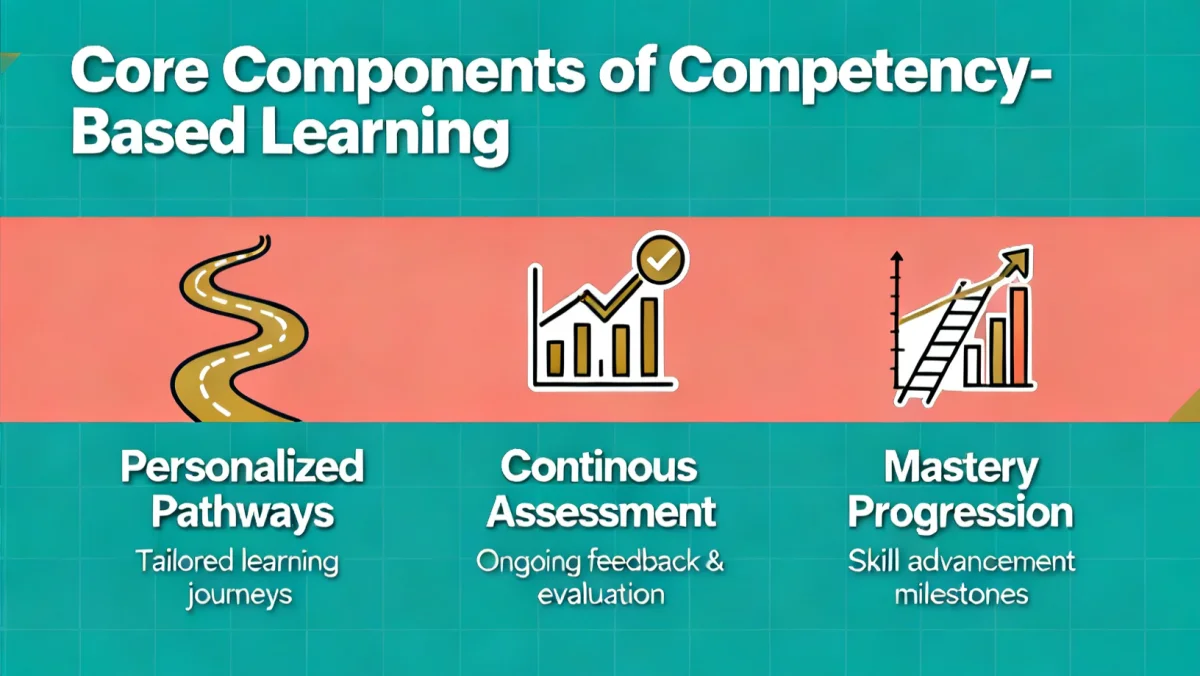
The emphasis on individual pace and personalized pathways means that education can become far more tailored to each student’s needs and learning style. Instead of a one-size-fits-all approach, CBL allows for flexibility, ensuring that every student has the opportunity to achieve mastery before moving on. This can drastically reduce learning gaps and foster a stronger sense of accomplishment.
Defining Key Competencies
Central to CBL is the clear definition of competencies. These are not just broad subjects, but specific, measurable, and observable skills and knowledge that students are expected to acquire. For instance, instead of ‘understanding history,’ a competency might be ‘analyzing primary source documents to identify historical bias.’
- Clear learning objectives are paramount for both students and educators.
- Competencies are often interdisciplinary, reflecting real-world application.
- Rubrics and clear criteria guide students towards mastery.
The clarity in defining these competencies provides a transparent roadmap for learning, empowering students to take ownership of their educational journey. It also allows educators to focus their instruction and assessment more effectively, targeting specific areas where students need support or enrichment. This precision is a hallmark of the competency-based approach.
The Benefits of Competency-Based Learning in 2026
The widespread adoption of competency-based learning by 2026 is driven by its compelling benefits, which address many shortcomings of traditional educational systems. This model promises to create more engaged, effective, and equitable learning environments, preparing students more robustly for future academic and professional challenges.
One of the most significant advantages is the personalization of learning. Students are not forced to move at the same pace as their peers, meaning those who grasp concepts quickly can advance, while those who need more time receive the necessary support without feeling rushed or left behind. This individualized approach caters to diverse learning styles and ensures deeper understanding.
Enhanced Student Engagement and Motivation
When students are actively involved in demonstrating mastery, their engagement naturally increases. The focus shifts from rote memorization to meaningful application, making learning more relevant and exciting. Success builds confidence, fostering a positive feedback loop.
- Students gain a stronger sense of agency over their learning paths.
- Progress is visibly tracked, providing clear indicators of achievement.
- Intrinsic motivation is boosted by the pursuit of mastery rather than grades alone.
This heightened engagement is crucial for long-term retention and the development of lifelong learners. When students understand the ‘why’ behind their learning and see tangible progress, they are more likely to remain motivated and committed to their educational goals. This is a powerful antidote to disengagement often seen in traditional settings.
Improved Outcomes and Workforce Readiness
Competency-based learning directly links educational attainment to tangible skills, making graduates more prepared for the workforce. Employers increasingly seek individuals who can demonstrate specific abilities, not just academic credentials. CBL ensures students leave with a portfolio of proven competencies.
Furthermore, this model encourages the development of critical 21st-century skills such as critical thinking, problem-solving, collaboration, and adaptability. These are not merely taught but are embedded within the competency frameworks, requiring students to apply them actively within their learning tasks. The result is a more capable and adaptable future workforce.
Navigating the Challenges of Implementation
While the benefits of competency-based learning are clear, its widespread implementation by 2026 also presents significant challenges. Transitioning from established educational paradigms requires careful planning, substantial resources, and a willingness to rethink fundamental aspects of schooling. Addressing these hurdles effectively is crucial for success.
One major challenge lies in the sheer scale of the shift. It’s not just about updating curriculum; it involves retraining educators, redesigning assessment methods, and convincing stakeholders—including parents and students—of the value of this new approach. Resistance to change, often rooted in familiarity with traditional systems, can be a formidable obstacle.
Rethinking Assessment and Credentialing
Traditional grading systems and standardized tests are ill-suited for competency-based models. New assessment strategies are needed that accurately measure mastery, often involving performance-based tasks, portfolios, and continuous feedback. This requires a significant paradigm shift for educators and institutions.
- Developing robust and reliable mastery-based assessments is complex.
- Ensuring equitable and consistent evaluation across different contexts is vital.
- Establishing new credentialing systems that recognize demonstrated competencies is necessary.
The move away from traditional letter grades to a system that reflects mastery can also be confusing for parents and even some employers initially. Clear communication and robust frameworks for translating competencies into recognizable qualifications will be essential to gain widespread acceptance and trust in the new system.
Professional Development for Educators
Educators, accustomed to traditional teaching methods, require extensive professional development to effectively implement CBL. This includes training in designing competency frameworks, developing performance-based assessments, providing individualized feedback, and facilitating self-paced learning environments. This is a continuous process, not a one-time event.
Furthermore, educators need support in shifting their mindset from content delivery to learning facilitation. Their role becomes more akin to a coach or mentor, guiding students through personalized pathways and intervening when specific support is needed. This requires a different skill set and pedagogical approach, necessitating ongoing training and resources.
Technological Enablers for Competency-Based Learning
The widespread adoption of competency-based learning by 2026 is significantly bolstered by advancements in educational technology. Digital tools and platforms are not just supplementary; they are becoming integral to managing, delivering, and assessing competency-based pathways, making the model more scalable and efficient.
Learning Management Systems (LMS) with robust features for tracking individual progress, assigning mastery-based tasks, and providing personalized feedback are crucial. These platforms can automate many administrative tasks, freeing up educators to focus more on direct student support and instructional design.
Adaptive Learning Platforms
Adaptive learning technologies are particularly well-suited for CBL. These platforms use artificial intelligence to tailor content and learning paths to each student’s performance, identifying areas of strength and weakness and adjusting the curriculum accordingly. This ensures that students are always working at their optimal challenge level.
- Personalized content delivery based on student proficiency.
- Real-time data analytics for educators to monitor progress.
- Automated feedback loops to guide student learning.
The ability of these platforms to provide immediate and targeted feedback is invaluable in a competency-based environment. Students can quickly identify where they need to improve and access resources specifically designed to address those gaps, accelerating their path to mastery. This continuous feedback loop is a cornerstone of effective CBL.
Policy and Systemic Changes Required
For competency-based learning to truly flourish by 2026, it requires more than just pedagogical shifts; it demands significant policy and systemic changes at local, state, and national levels. Without supportive frameworks, even the most innovative school-level initiatives will struggle to gain traction and sustainability. This involves rethinking everything from funding models to graduation requirements.
Policymakers must work to remove regulatory barriers that often tie funding or student progression to seat time rather than demonstrated learning. This includes re-evaluating state testing mandates and creating pathways for alternative forms of credentialing that are recognized by higher education institutions and employers.
Funding Models and Resource Allocation
The transition to CBL often requires initial investment in technology, professional development, and curriculum redesign. Existing funding models, which are often based on student enrollment and attendance, may need to be adjusted to support the flexible, individualized nature of competency-based systems.
Equitable resource allocation is also critical to ensure that all schools, regardless of their socioeconomic context, have the means to implement CBL effectively. This means addressing disparities in access to technology, qualified educators, and support staff, ensuring that the benefits of this shift are accessible to all students.
The Future Impact on Students and Society
The 2026 shift towards competency-based learning is poised to have a profound and lasting impact on students and, by extension, on society as a whole. By fostering a generation of learners who are truly proficient in essential skills and capable of continuous adaptation, CBL can contribute to a more skilled workforce, a more engaged citizenry, and a more equitable society.
Students graduating from competency-based programs will possess not only deep subject matter expertise but also critical meta-skills like self-direction, resilience, and a growth mindset. These attributes are invaluable in a rapidly changing world where learning is a lifelong endeavor and adaptability is key to success.
Preparing for an Unpredictable Future
In an era characterized by rapid technological advancement and evolving job markets, preparing students for specific careers becomes increasingly challenging. CBL, with its focus on transferable skills and demonstrated capabilities, offers a robust framework for equipping students to thrive in an unpredictable future.
- Students develop strong problem-solving and critical thinking skills.
- Emphasis on real-world application fosters practical competence.
- Adaptability and continuous learning become ingrained habits.
The long-term societal benefits are immense. A population with a strong foundation of diverse competencies will be better equipped to innovate, address complex global challenges, and participate actively in democratic processes. Competency-based learning is not just about individual success; it’s about building a more capable and resilient society for generations to come.
| Key Aspect | Brief Description |
|---|---|
| Personalized Learning | Students advance based on demonstrated mastery, not seat time, tailoring education to individual pace. |
| Enhanced Engagement | Focus on meaningful application and clear progress boosts student motivation and ownership. |
| Implementation Challenges | Requires significant shifts in assessment, educator training, and policy frameworks. |
| Technological Enablers | Adaptive learning platforms and LMS are crucial for effective management and delivery. |
Frequently Asked Questions About Competency-Based Learning
The core difference is that CBL focuses on demonstrated mastery of specific skills and knowledge, allowing students to progress at their own pace. Traditional learning, conversely, emphasizes fixed timeframes (like semesters or school years) and content coverage, often regardless of individual mastery levels.
CBL offers personalized learning paths, leading to deeper understanding and higher engagement. Students gain a stronger sense of ownership over their education, develop crucial 21st-century skills, and are better prepared for both higher education and the demands of the modern workforce due to proven competencies.
Key challenges include redesigning assessment methods away from traditional grading, providing extensive professional development for educators, securing adequate funding, and navigating existing policy frameworks that often prioritize seat time over demonstrated competence. Systemic change is complex.
Technology is a critical enabler. Adaptive learning platforms and robust Learning Management Systems (LMS) help track student progress, deliver personalized content, and provide continuous feedback. These tools make individualized learning pathways scalable and manageable for educators and institutions.
CBL directly addresses workforce needs by ensuring graduates possess demonstrable skills and competencies highly valued by employers. It fosters adaptability, problem-solving, and critical thinking, preparing individuals for evolving job markets and lifelong learning, ultimately creating a more skilled and flexible workforce.
Conclusion
The 2026 shift towards competency-based learning represents a pivotal moment in educational reform. While the transition presents undeniable challenges in terms of policy, assessment, and professional development, the benefits of a more personalized, engaging, and outcomes-focused approach are too significant to ignore. By embracing this model, educational systems can better prepare students for the complexities of the 21st century, fostering a generation of lifelong learners equipped with the demonstrable skills necessary for success in an ever-changing world. This evolution is not just about improving education; it’s about fundamentally rethinking how we empower individuals and build a more capable society.
