2026 Social Security Benefits Adjustments: What to Expect

The 2026 Social Security benefits adjustments are poised to modify payments for millions, reflecting economic shifts and legislative considerations that will influence financial planning for retirees and beneficiaries nationwide.
As we approach 2026, many Americans are keenly focused on understanding the 2026 Social Security benefits adjustments. These annual modifications are crucial for millions of retirees, disabled individuals, and survivors who rely on Social Security for financial stability. Navigating the changes can seem complex, but grasping the key factors involved is essential for effective financial planning. This article delves into what you can anticipate, from the Cost-of-Living Adjustment (COLA) to potential legislative impacts and how these shifts might shape your financial future.
The mechanics of Social Security adjustments
Social Security benefits are not static; they undergo annual adjustments to keep pace with economic realities. These adjustments are primarily driven by the Cost-of-Living Adjustment, or COLA, which aims to protect the purchasing power of benefits against inflation. Understanding how COLA is calculated and other factors influencing benefits is fundamental to anticipating future changes.
COLA is determined by an index known as the Consumer Price Index for Urban Wage Earners and Clerical Workers (CPI-W). This index measures the average change over time in the prices paid by urban consumers for a market basket of consumer goods and services. The Social Security Administration (SSA) compares the CPI-W from the third quarter of the current year to the third quarter of the previous year. If there’s an increase, benefits are adjusted accordingly. However, the calculation is not always straightforward, and various economic indicators can influence the final percentage.
How COLA is determined
The calculation of COLA involves a specific period and comparison. The average CPI-W for the third quarter (July, August, and September) of the current year is compared to the average for the third quarter of the last year in which a COLA was payable. If the current year’s average is higher, the percentage increase becomes the COLA for the following year. This method ensures that beneficiaries do not lose ground due to rising costs.
- CPI-W Data: The primary data point for COLA calculation.
- Inflation Rates: Directly impacts the CPI-W and thus COLA.
- Economic Forecasts: Expert projections can offer early insights into potential COLA figures.
Beyond COLA, other factors like changes in the national average wage index (NAWI) can influence how future benefits are calculated for new retirees. The NAWI affects the maximum earnings subject to Social Security taxes and the bend points in the benefit formula, which determine how earnings are translated into benefits. These elements collectively shape the financial outlook for Social Security recipients.
In essence, the Social Security Administration employs a robust, data-driven approach to ensure that benefits retain their value over time. While COLA is the most visible adjustment, the interplay of various economic indices and legislative frameworks ensures a dynamic system that adapts to the nation’s financial landscape.
Projected COLA for 2026: Early forecasts and influences
Forecasting the exact Cost-of-Living Adjustment for 2026 is challenging, as it depends on economic conditions that are still unfolding. However, early projections and an analysis of current trends can offer valuable insights. Several economic factors typically play a significant role in shaping the COLA, and understanding these can help beneficiaries prepare.
Inflation is undoubtedly the most critical driver of COLA. If inflation rates remain elevated, or even if they stabilize at a higher level than previous years, it is likely to translate into a noticeable COLA for 2026. Conversely, a period of low inflation would result in a minimal, or even zero, COLA, although the latter is rare due to the inherent upward trend of prices over time. Economic growth also plays a role, as a strong economy can sometimes be accompanied by inflationary pressures.
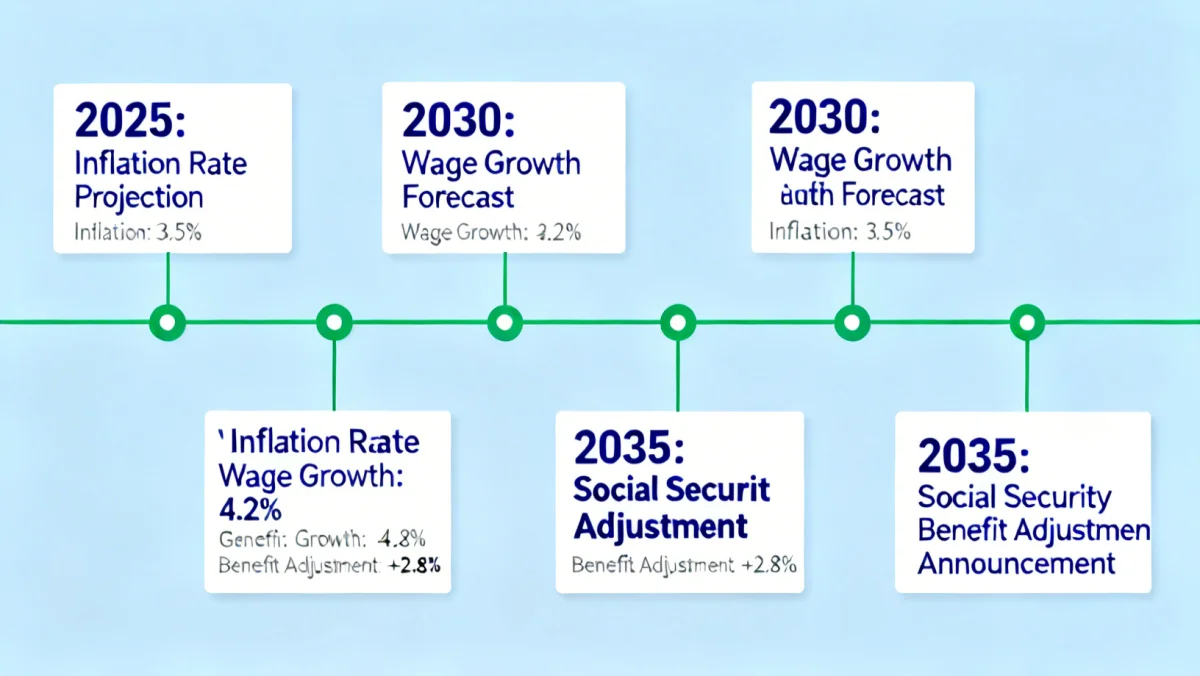
Key economic indicators to watch
Several indicators provide clues about the direction of inflation and, consequently, the potential COLA. The Consumer Price Index (CPI) in its various forms, particularly the CPI-W, is the most direct measure. Beyond that, energy prices, food costs, and housing expenses are significant components of the CPI and warrant close attention. Wage growth is another factor, as rising wages can contribute to increased consumer spending and inflationary pressures.
- Energy Prices: Volatility in oil and gas can significantly impact the CPI-W.
- Food Costs: Essential for most households, changes in food prices are closely watched.
- Housing Market Trends: Rental costs and homeownership expenses contribute to overall inflation.
- Labor Market Data: Wage increases can signal broader inflationary trends.
Analysts often use models that incorporate these economic variables to predict COLA. While these predictions are not guarantees, they provide a reasonable approximation of what beneficiaries might expect. For 2026, many experts will be closely monitoring the Federal Reserve’s monetary policy decisions, global supply chain stability, and geopolitical events, all of which can have a ripple effect on inflation and the economic landscape.
Ultimately, the 2026 COLA will be a reflection of the economic environment in the preceding year. Staying informed about these key indicators and expert analyses will be crucial for anyone planning their finances around Social Security benefits.
Eligibility requirements and how they might change
Understanding the eligibility requirements for Social Security benefits is paramount, and these rules can sometimes be subject to change. While major overhauls are less frequent, minor adjustments or proposed legislative changes could impact who qualifies and under what conditions for 2026. Knowing the current framework is the first step in assessing potential future modifications.
Generally, eligibility for Social Security retirement benefits is based on earning sufficient work credits. Most individuals need 40 credits, equivalent to 10 years of work, to qualify. These credits are earned by paying Social Security taxes on your earnings. The amount of earnings required for a single credit changes annually, reflecting wage inflation. For 2026, it is highly probable that the amount of earnings needed to earn a credit will increase, as it typically does each year.
Potential legislative impacts on eligibility
While the basic credit system is unlikely to change drastically, legislative discussions around Social Security solvency could introduce new considerations. Debates often revolve around adjusting the full retirement age (FRA), which is currently between 66 and 67, depending on your birth year. Raising the FRA would mean individuals would have to work longer to receive their full benefits or accept reduced benefits if they claim earlier.
- Full Retirement Age (FRA): Potential increases are a recurring topic in legislative discussions.
- Taxable Earnings Cap: Changes to the maximum earnings subject to Social Security taxes could affect high earners.
- Benefit Formula Modifications: While less likely for 2026, broader reforms could alter how benefits are calculated.
Another area of focus for potential changes includes the taxation of Social Security benefits. While a portion of benefits may already be taxable for some individuals, any legislative action could alter the income thresholds or the percentage of benefits subject to federal income tax. Such changes would directly impact the net benefit received by many. It is essential for beneficiaries and future retirees to monitor legislative developments closely, as even seemingly minor adjustments can have significant financial implications.
In summary, while the core eligibility for Social Security is stable, the specifics of how benefits are earned, when they can be claimed at full value, and how they are taxed are all areas that could see adjustments by 2026. Staying informed about these potential shifts is crucial for proactive financial planning.
Impact on different beneficiary groups
The 2026 Social Security benefits adjustments will not affect all beneficiaries uniformly. While a general COLA applies across the board, the actual financial impact can vary significantly depending on an individual’s specific circumstances, including their benefit amount, other sources of income, and their tax situation. Understanding these differential impacts is key to assessing personal financial adjustments.
For retirees, the COLA directly translates into a higher monthly check. However, if Medicare Part B premiums also increase, a portion of this COLA might be absorbed by those premium hikes, especially for those whose premiums are deducted directly from their Social Security benefits. This phenomenon, known as the ‘hold harmless’ provision, protects most beneficiaries from a reduction in their net Social Security payment due to Medicare premium increases, but it can limit the perceived benefit of a COLA.
Specific considerations for various beneficiary types
Disabled individuals and survivors also receive COLA adjustments, ensuring their benefits maintain purchasing power. However, those receiving Supplemental Security Income (SSI) may experience different impacts due to separate federal benefit rate (FBR) adjustments and specific income and resource limits. SSI benefits are needs-based, and any increase in Social Security benefits could, in some cases, affect their SSI eligibility or benefit amount, though often not significantly for small COLA increases.
- Retirees: Direct increase in monthly benefits, potentially offset by Medicare premium adjustments.
- Disabled Beneficiaries: COLA applies, but interaction with other disability programs may vary.
- Survivors: Benefits for widows, widowers, and children also receive COLA.
- High-Income Earners: May see a larger portion of their benefits subject to federal income tax, depending on thresholds.
Furthermore, individuals who continue to work while receiving Social Security benefits might face different earnings limits each year. Exceeding these limits can lead to a temporary reduction in benefits, which are then recalculated at full retirement age. For 2026, these earnings limits are likely to increase, allowing beneficiaries to earn more before their benefits are affected. This is particularly relevant for those transitioning into retirement or working part-time.
In essence, while the COLA is a universal adjustment, its net effect on individuals is highly personalized. Beneficiaries should review their specific financial situation and consider all income sources and expenses when anticipating the full scope of the 2026 Social Security adjustments.
Strategies for financial planning amidst changes
Given the anticipated 2026 Social Security benefits adjustments, proactive financial planning becomes even more critical. Understanding how these changes might affect your income stream allows you to adapt your budget and investment strategies to maintain financial security. It’s not just about reacting to changes but anticipating them.
One primary strategy involves reviewing your current budget in light of potential COLA increases and any corresponding rise in expenses, such as Medicare premiums. Even a modest COLA can make a difference, but it’s important to consider your overall financial picture. If your expenses are rising faster than your COLA, you might need to explore ways to reduce spending or increase other income sources.
Maximizing your Social Security benefits
Beyond simply receiving your adjusted benefits, there are strategies to maximize what you get from Social Security. Delaying claiming benefits past your full retirement age, up to age 70, can result in significantly higher monthly payments due to delayed retirement credits. Conversely, claiming early means accepting a reduced benefit for life. The optimal claiming age depends on individual health, financial needs, and life expectancy.
- Review your claiming strategy: Re-evaluate when you plan to claim benefits based on health and financial needs.
- Consider working longer: Each additional year of work, especially if it’s one of your highest-earning years, can increase your benefit amount.
- Consult a financial advisor: Professional guidance can help tailor strategies to your unique situation.
- Stay informed: Regularly check official Social Security Administration announcements and economic forecasts.
Another important aspect of financial planning is understanding the taxation of your Social Security benefits. Depending on your combined income, a portion of your benefits may be subject to federal income tax. Planning for this can involve managing other income streams, such as withdrawals from retirement accounts, to keep your combined income below certain thresholds. Tax planning is an integral part of maximizing your net Social Security income.
Ultimately, a comprehensive financial plan that incorporates anticipated Social Security adjustments, potential legislative changes, and personal financial goals is essential. This proactive approach ensures that you are well-prepared for any shifts and can continue to enjoy a stable and secure financial future.
Legislative landscape and future outlook
The future of Social Security is a perennial topic of discussion in Washington, D.C., and the legislative landscape can significantly influence future benefits beyond the annual COLA. While major reforms are often challenging to pass, ongoing debates about the program’s long-term solvency could lead to significant adjustments down the line. For 2026, while radical changes are unlikely to be enacted and implemented within such a short timeframe, the groundwork for future modifications could be laid.
The Social Security Trust Funds are projected to be able to pay 100 percent of scheduled benefits until the mid-2030s. After that, without congressional action, they would be able to pay about 80 percent of scheduled benefits. This long-term outlook is what drives many of the legislative discussions. Potential solutions often include a combination of increasing the full retirement age, adjusting the COLA formula, raising the Social Security tax rate, or increasing the amount of earnings subject to Social Security taxes.
Key areas of legislative focus
Lawmakers often consider various approaches to strengthen the program’s finances. These discussions are complex, involving economic, social, and political considerations. Understanding the different proposals circulating in Congress can help beneficiaries anticipate the direction of potential future changes.
- Full Retirement Age adjustments: A common proposal to address solvency.
- Tax rate increases: Could involve increasing the percentage of wages taxed for Social Security.
- Changes to the taxable earnings cap: Raising the maximum income subject to Social Security taxes.
- Benefit formula modifications: Less common, but could involve adjusting how benefits are calculated for future retirees.
It’s important to differentiate between immediate annual adjustments, like COLA, and long-term structural reforms. While the 2026 Social Security benefits adjustments will primarily be influenced by economic conditions and the COLA formula, the broader legislative environment sets the stage for how Social Security will operate in the decades to come. Monitoring congressional discussions and proposals from advocacy groups can provide valuable insights into the program’s long-term trajectory.
The legislative process is often slow and deliberate, especially when it concerns a program as vital as Social Security. However, staying informed about these discussions is essential for anyone planning their retirement and financial future, as potential reforms could have far-reaching implications.
Preparing for the 2026 Social Security adjustments
Proactive preparation is the best approach for navigating the 2026 Social Security benefits adjustments. While some factors, like the exact COLA percentage, are beyond individual control, there are concrete steps you can take to ensure you are financially resilient and well-informed. This involves staying updated, reviewing your personal financial situation, and making necessary adjustments to your long-term plan.
One of the most effective ways to prepare is to regularly check the official Social Security Administration (SSA) website. The SSA is the authoritative source for all announcements regarding COLA, earnings limits, and any legislative changes. Subscribing to their newsletters or following their official communications can ensure you receive timely and accurate information directly.
Actionable steps for beneficiaries
Beyond official sources, engaging with financial news and reputable financial advisors can provide broader context and personalized insights. A financial advisor can help you integrate Social Security adjustments into your overall retirement plan, considering your investments, savings, and other income streams. They can also assist with tax planning to minimize the impact of taxes on your benefits.
- Monitor official SSA announcements: Stay informed directly from the source.
- Review personal financial statements: Understand how adjustments will impact your budget.
- Update retirement projections: Recalibrate your long-term financial goals.
- Seek professional financial advice: Tailor strategies to your specific needs.
- Engage in tax planning: Optimize your income to minimize benefit taxation.
Furthermore, it’s prudent to consider various scenarios. What if the COLA is higher than expected? What if it’s lower? Having a flexible financial plan that can adapt to different outcomes will provide greater peace of mind. This might involve building a larger emergency fund, diversifying investments, or exploring additional income opportunities.
In conclusion, while the specifics of the 2026 Social Security benefits adjustments will become clearer closer to the date, a prepared and informed beneficiary is a resilient one. By taking these actionable steps, you can ensure that you are well-positioned to understand and adapt to whatever changes the coming year brings.
| Key Aspect | Brief Description |
|---|---|
| COLA Mechanism | Annual Cost-of-Living Adjustment based on CPI-W to protect purchasing power. |
| Economic Influences | Inflation, energy, food, and housing costs are key drivers of COLA predictions. |
| Eligibility & Legislation | Work credits remain key; potential long-term legislative changes to FRA or taxes. |
| Financial Planning | Review budget, optimize claiming age, and consult advisors for personalized strategies. |
Frequently asked questions about 2026 Social Security adjustments
The primary factor driving the 2026 Social Security adjustments is the Cost-of-Living Adjustment (COLA). This annual increase is calculated based on changes in the Consumer Price Index for Urban Wage Earners and Clerical Workers (CPI-W), designed to help benefits keep pace with inflation and maintain beneficiaries’ purchasing power.
Medicare Part B premiums are often deducted directly from Social Security benefits. While the COLA will increase your gross benefit, any rise in Medicare premiums might offset a portion of that increase. The ‘hold harmless’ provision protects many from a net benefit reduction, but the actual net gain from COLA can vary.
While legislative discussions about increasing the full retirement age (FRA) are ongoing, it’s highly unlikely that any change would be enacted and implemented by 2026. Such reforms typically require significant political consensus and notice, usually phased in over many years to minimize disruption for beneficiaries.
Yes, for many beneficiaries, a portion of Social Security benefits may be subject to federal income tax in 2026, depending on their combined income. The income thresholds for taxation are adjusted periodically, so it’s important to monitor these and plan your overall income streams accordingly to manage potential tax liabilities.
To prepare, monitor official SSA announcements, review your personal budget, and consider consulting a financial advisor. They can help you understand the potential impact of COLA and other adjustments on your specific financial situation, aiding in proactive planning and optimizing your benefit claiming strategy.
Conclusion
The 2026 Social Security benefits adjustments represent a crucial annual update that impacts millions of Americans. While the precise details of the Cost-of-Living Adjustment (COLA) and other potential modifications will become clearer as 2025 progresses, staying informed and planning proactively is paramount. Understanding the mechanics of COLA, recognizing the influence of economic indicators, and being aware of the ongoing legislative discussions empowers beneficiaries to make sound financial decisions. By taking a proactive approach, individuals can navigate these changes with confidence, ensuring their financial security remains robust in the face of evolving economic realities.
