2026 Housing Market: Median Home Prices Up 4% Nationally
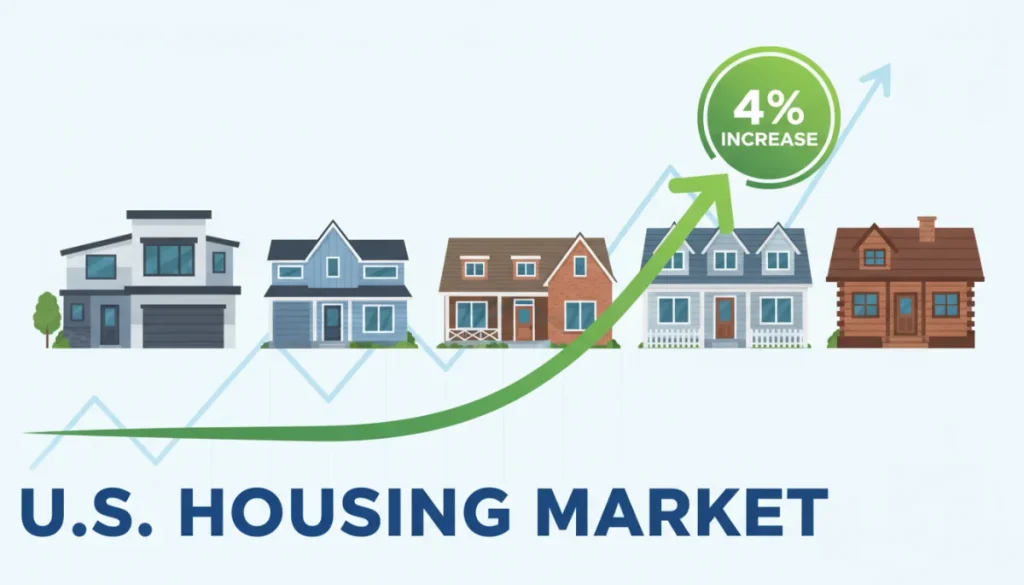
The 2026 housing market update indicates a significant 4% national increase in median home prices, driven by evolving economic conditions, shifting demographics, and persistent supply-demand imbalances.
The 2026 housing market update reveals a pivotal moment for homeowners, buyers, and investors across the United States. With median home prices experiencing a notable 4% increase nationally, understanding the underlying dynamics is crucial for navigating this evolving landscape.
Understanding the 4% National Median Home Price Increase
The recent announcement of a 4% national increase in median home prices for 2026 has sparked considerable discussion. This figure represents a complex interplay of economic forces, demographic shifts, and regional variations that collectively shape the real estate sector. It’s not merely a number but a reflection of market confidence, demand pressures, and the ongoing adjustments from previous years.
This growth is a testament to the resilience of the U.S. housing market, even as it faces various headwinds. While a 4% increase may seem modest compared to the surges seen in earlier periods, it signifies a healthy, sustainable appreciation that provides stability for homeowners and continued challenges for prospective buyers. Analyzing the components of this increase helps in grasping the broader implications.
Key Drivers of Price Appreciation
Several factors are contributing to this steady rise in median home prices. Understanding these drivers is essential for anyone looking to make informed decisions in the current market.
- Limited Housing Supply: Despite new construction efforts, the overall inventory of homes for sale remains constrained, particularly in desirable urban and suburban areas. This scarcity naturally pushes prices upward as demand outstrips available properties.
- Sustained Buyer Demand: A combination of demographic trends, such as millennials entering their prime homebuying years, and continued population growth ensures a consistent pool of buyers. This demand is further fueled by a desire for homeownership as a long-term investment.
- Inflationary Pressures: Broader economic inflation impacts the cost of construction materials, labor, and land, which in turn translates into higher new home prices. Existing home prices often follow suit, adjusting to the increased cost of replacement.
- Wage Growth: While not uniform across all sectors, general wage growth allows more potential buyers to qualify for mortgages and afford higher home prices, maintaining purchasing power in the market.
Ultimately, the 4% increase is a balanced indicator, suggesting neither an overheated market nor a significant downturn. It points to a market that is finding its equilibrium amidst dynamic economic conditions.
Regional Variations and Local Market Hotspots
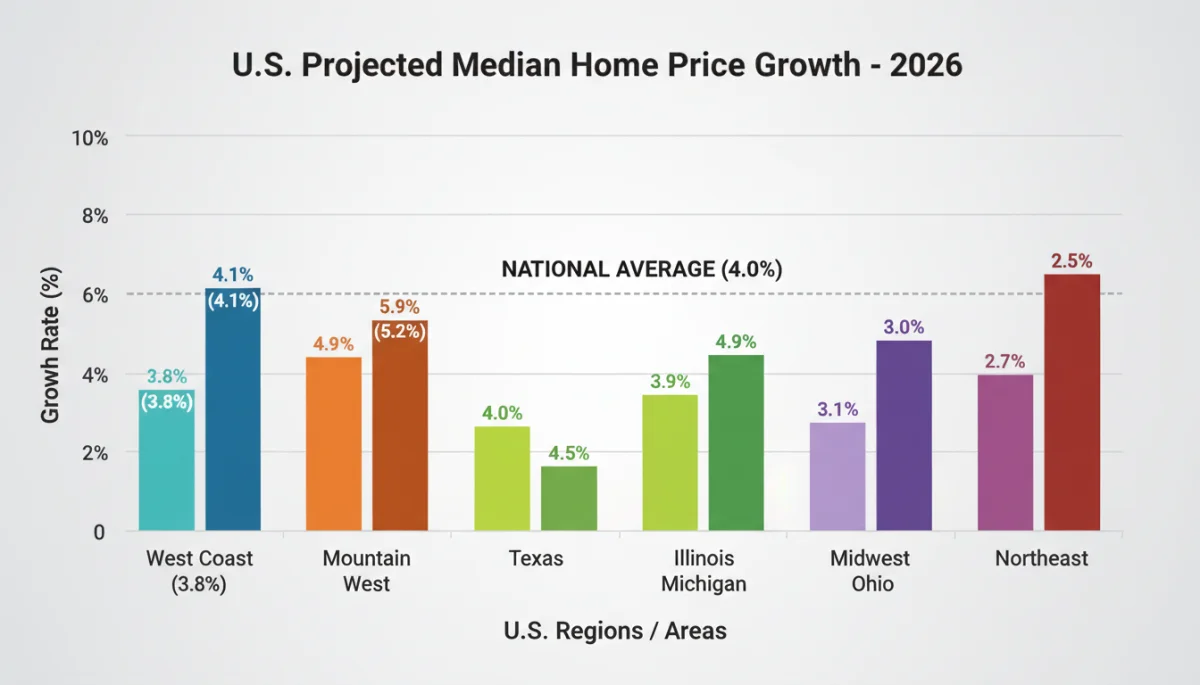
While the national median home price increase stands at 4%, it is crucial to recognize that the U.S. housing market is far from monolithic. Regional variations are significant, with some areas experiencing double-digit growth and others seeing more modest gains or even slight corrections. These local market hotspots are driven by specific economic, demographic, and lifestyle factors.
Understanding these regional differences is paramount for both buyers and sellers. A national average can obscure the realities on the ground, where local job markets, population shifts, and infrastructure developments play a more direct role in property values. For instance, cities with burgeoning tech sectors or strong healthcare industries often see accelerated appreciation due to high demand and robust employment opportunities.
Emerging Growth Areas
Certain regions are consistently outperforming the national average, becoming magnets for new residents and investment. These areas often share common characteristics that contribute to their rapid growth.
- Sun Belt Cities: Metropolitan areas across the Sun Belt continue to attract significant migration, driven by warmer climates, lower costs of living (relative to coastal hubs), and expanding job markets. Cities in Florida, Texas, Arizona, and the Carolinas are prime examples.
- Secondary Markets: Many buyers are looking beyond traditional primary urban centers to secondary cities that offer a better quality of life, more affordable housing, and developing economic opportunities. These include cities like Boise, Nashville, and Raleigh.
- Suburban Expansion: The trend towards remote or hybrid work continues to boost suburban markets, as individuals and families seek more space and better amenities without needing to be in the immediate vicinity of a central business district.
Conversely, some markets, particularly those that saw explosive growth during the pandemic, are now experiencing a leveling off or slight cooling. This adjustment is often a healthy rebalancing rather than a sign of distress, bringing prices back into alignment with local economic fundamentals.
Impact of Interest Rates and Affordability Challenges
Interest rates remain a critical factor influencing the housing market, directly impacting buyer affordability and overall market activity. While the Federal Reserve’s policies aim for economic stability, their decisions on rates have immediate repercussions for mortgage costs, which in turn affect how much home buyers can afford. The 4% national price increase, coupled with current interest rate trends, presents a nuanced picture for prospective homeowners.
Higher interest rates translate to higher monthly mortgage payments, even for the same home price. This can significantly reduce purchasing power, especially for first-time buyers or those with tighter budgets. As a result, some buyers may be priced out of certain markets or forced to adjust their expectations regarding home size, location, or amenities. The delicate balance between rising home prices and fluctuating interest rates is central to understanding affordability challenges in 2026.
Navigating Affordability Hurdles
For many Americans, the dream of homeownership faces considerable obstacles. The combination of elevated prices and higher borrowing costs necessitates strategic planning.
- Budget Reassessment: Buyers are increasingly needing to re-evaluate their budgets, potentially looking at properties at lower price points or in less competitive neighborhoods.
- Down Payment Strategies: Saving for a substantial down payment becomes even more crucial to reduce the loan amount and, consequently, the monthly mortgage payment.
- Adjustable-Rate Mortgages (ARMs): While carrying more risk, some buyers might consider ARMs for lower initial payments, though this requires careful consideration of future rate changes.
- First-Time Buyer Programs: Government-backed and local programs offering down payment assistance or favorable loan terms are becoming increasingly vital resources for overcoming entry barriers.
The collective impact of these factors means that while the market is appreciating, access to homeownership is becoming more challenging for a segment of the population. Policymakers and lenders are continually exploring solutions to address these affordability gaps.
Supply and Demand Dynamics in 2026
The fundamental economic principles of supply and demand continue to exert a powerful influence on the 2026 housing market. The 4% national median home price increase is largely a direct consequence of an ongoing imbalance where demand consistently outpaces the available supply of homes. This persistent disparity creates a competitive environment for buyers and provides leverage for sellers.
New construction, while active, has struggled to keep pace with population growth and the formation of new households. Factors such as labor shortages, supply chain disruptions for building materials, and regulatory hurdles contribute to the slower-than-needed expansion of housing inventory. Furthermore, many existing homeowners are hesitant to sell, often due to having secured historically low mortgage rates in previous years, which limits the number of resale properties entering the market.
Addressing the Supply Shortage
Solving the housing supply crisis is a multifaceted challenge that requires coordinated efforts from various stakeholders.
One primary approach involves increasing the rate of new home construction. This includes streamlined permitting processes and incentives for builders to develop more diverse housing types, including starter homes and multi-family units. Innovations in construction techniques, such as modular or prefabricated homes, could also play a role in accelerating supply.
Another aspect is the efficient utilization of existing housing stock. Policies that encourage homeowners to sell or convert underutilized properties, alongside efforts to reduce vacancy rates, can contribute to alleviating supply pressures. The goal is to create a more fluid market where the number of homes available more closely aligns with the needs of the growing population.
Ultimately, a sustained increase in housing supply is essential for moderating price growth and improving affordability across the nation, ensuring that the 4% increase remains a sign of healthy growth rather than an indicator of an inaccessible market.
The Role of Economic Indicators and Consumer Confidence
The health of the 2026 housing market is intrinsically linked to broader economic indicators and the prevailing sentiment of consumer confidence. A 4% national increase in median home prices does not occur in a vacuum; it reflects underlying economic strength, employment stability, and the general optimism (or pessimism) of potential buyers and sellers. Key economic metrics provide crucial context for understanding market trajectories.
Factors such as GDP growth, inflation rates, and unemployment figures all play a significant role. A robust economy typically leads to higher employment rates and wage growth, which in turn supports homebuying activity and the ability of consumers to afford higher prices. Conversely, economic uncertainty can lead to reduced consumer confidence, causing potential buyers to postpone large purchases like homes, thereby slowing market activity.
Influential Economic Metrics
- Job Growth: A strong and growing job market is perhaps the most fundamental driver of housing demand, as it provides individuals with the financial security to purchase homes.
- Inflation: While moderate inflation can contribute to asset appreciation, high inflation can erode purchasing power and lead to higher interest rates, impacting affordability.
- GDP Performance: Consistent GDP growth signals a healthy economy, fostering an environment conducive to real estate investment and development.
- Consumer Sentiment Index: Surveys measuring consumer confidence offer insights into whether people feel secure enough about their financial future to make significant investments.
The positive 4% price movement suggests that, on a national level, economic indicators are largely supportive, and consumer confidence, while perhaps cautious, remains strong enough to sustain demand in the housing sector.
Future Outlook: Projections and Potential Headwinds
Looking beyond the immediate 4% national median home price increase, the 2026 housing market presents a mixed bag of continued growth projections and potential headwinds. While the current trajectory suggests sustained appreciation, various factors could influence the market’s path over the coming months and years. Understanding these future dynamics is essential for strategic planning by all market participants.
Experts generally anticipate a more balanced market compared to the rapid escalations of previous years. This implies a steady, rather than explosive, growth rate, which can be healthier for long-term stability. However, this outlook is contingent on several economic and policy variables. The ability of the market to adapt to these evolving conditions will determine its ultimate performance.
Challenges and Opportunities Ahead
The path forward for the housing market is not without its complexities. Several elements could either accelerate or temper the current growth trend.
- Interest Rate Volatility: Unforeseen shifts in monetary policy could lead to further interest rate fluctuations, impacting affordability and buyer activity.
- Economic Downturns: A significant economic recession, though not currently anticipated, could dampen demand and lead to price corrections.
- Regulatory Changes: New housing policies, zoning reforms, or changes in lending regulations could alter market dynamics for both builders and buyers.
- Demographic Shifts: Continued migration patterns and the aging population will influence demand in different regions, creating new pockets of opportunity and challenge.
Despite these potential headwinds, opportunities abound for those who are well-informed and adaptable. The emphasis will increasingly be on strategic investments, sustainable development, and innovative solutions to address ongoing affordability and supply challenges, ensuring the market continues its steady, albeit measured, ascent.
| Key Aspect | Brief Description |
|---|---|
| Median Price Increase | National median home prices increased by 4% in 2026, indicating stable growth. |
| Driving Factors | Limited supply, sustained buyer demand, inflation, and wage growth contribute to price hikes. |
| Affordability Concerns | Rising interest rates and higher prices challenge buyer affordability, especially for first-timers. |
| Future Outlook | Projections suggest continued, more balanced growth, with potential headwinds from economic shifts. |
Frequently Asked Questions About the 2026 Housing Market
A 4% increase means homes are generally more expensive, requiring higher down payments and potentially larger mortgage loans. Buyers should anticipate competitive conditions and may need to adjust their budget or search criteria to find suitable properties within their financial reach.
No, the 4% is a national average. Regional housing markets vary significantly. Some areas, particularly in the Sun Belt or growing secondary cities, might see higher appreciation, while others could experience more modest gains or even slight price adjustments based on local economic conditions.
Higher interest rates increase the cost of borrowing, making monthly mortgage payments more expensive even with a 4% price increase. This can reduce buyer purchasing power and cool demand, although the current market shows demand remains strong enough to support price growth.
With a 4% national median home price increase, 2026 generally presents a favorable environment for sellers. Limited inventory and sustained buyer demand suggest homes are likely to sell relatively quickly and at competitive prices, especially in desirable markets.
Key challenges include persistent housing supply shortages, ongoing affordability issues due to rising prices and interest rates, and potential economic uncertainties. These factors collectively require strategic planning from both consumers and policymakers to maintain market stability.
Conclusion
The 2026 housing market, characterized by a 4% national median home price increase, reflects a dynamic and complex landscape. This growth is driven by a confluence of factors, including persistent demand, limited supply, and broader economic stability, yet it simultaneously highlights ongoing affordability concerns, particularly for first-time buyers. As the market continues to evolve, understanding regional variations, the impact of interest rates, and the critical balance between supply and demand will be paramount for making informed decisions. While challenges remain, the overall outlook suggests a period of more balanced, albeit steady, appreciation, underscoring the enduring value of real estate as a significant asset class in the United States.
